


Mass Fish Mortality After Heavy Rain and Storms: Causes, Prevention, and Pond Treatment
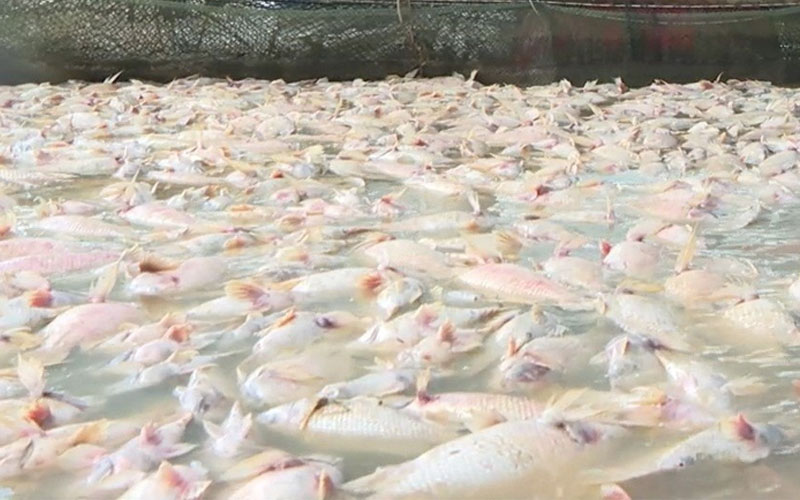
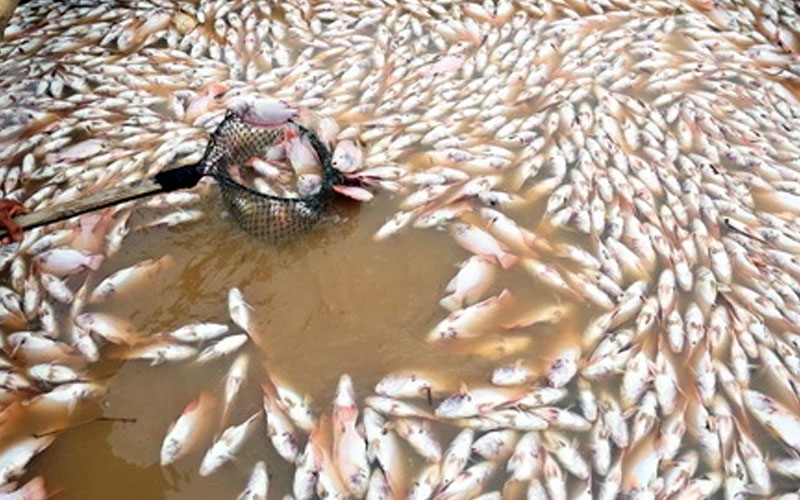
The rainy and storm season is always the biggest nightmare for aquaculture farmers. After every heavy rainfall or prolonged storm and flooding, mass fish mortality often occurs, with dead fish floating across ponds and cages, causing severe economic losses and, in many cases, leaving farmers completely devastated.
This article analyzes the causes of fish mortality after storms and heavy rainfall, while also providing comprehensive prevention and pond management solutions to help farmers proactively protect their fish stocks and safely get through the storm season.
Source: Internet
I – 5 Root Causes of Mass Fish Mortality After Heavy Rainstorms
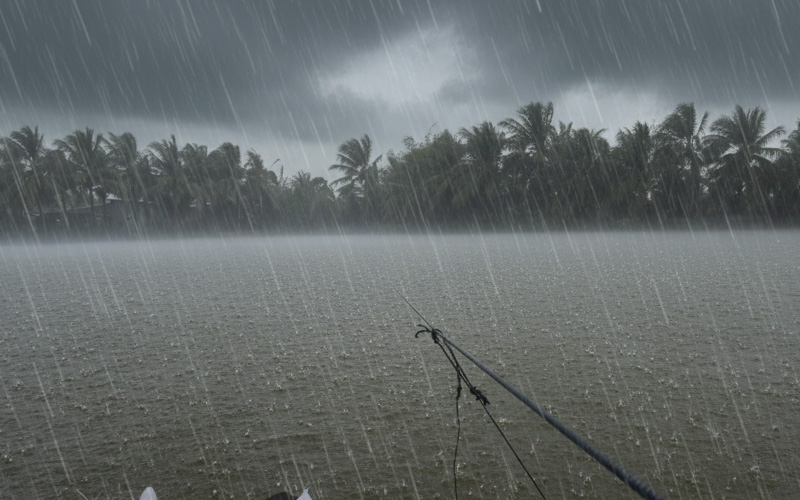
Fish deaths after rain are not simply caused by “dirty water,” but rather by the combined effects of multiple environmental factors that change abruptly. Below are the five main causes:
1. Sudden Dissolved Oxygen (DO) Depletion – The Number One Enemy
This is the most common and dangerous cause of mass fish mortality after rain.
- Water Stratification: Rainwater has a lower density and lower temperature than pond water, forming a cool freshwater layer on the surface. This creates water stratification, which blocks oxygen from the air from dissolving into the deeper water layers.
- Reduced Algal Activity: Prolonged rain and overcast conditions reduce light intensity, slowing or halting photosynthesis by phytoplankton—the main daytime source of oxygen in ponds.
- Disturbance of Bottom Sediment: Heavy rain accompanied by strong winds and fast water flow stirs up pond bottom sediment. This sediment contains large amounts of organic matter, which consumes a significant amount of dissolved oxygen during decomposition, causing DO levels—especially near the bottom—to drop sharply.
- Danger thresholds: DO below 3 mg/L can cause stress and surface gasping. DO below 1 mg/L can lead to mass fish deaths.
2. Environmental Shock: Sudden Changes in pH and Temperature
Abrupt changes in physicochemical conditions prevent fish from adapting in time, causing shock and weakening their immune systems:
- pH Drop: Rainwater is usually slightly acidic (low pH). Large volumes of rain entering the pond can cause a sudden decrease in pH (especially at the surface). The ideal pH range for freshwater fish is 6.5–7.5. When pH drops too low, fish are easily stressed, experience respiratory difficulties, and the toxicity of harmful gases increases.
- Thermal Shock: Rainwater is cooler than pond water. This sudden temperature change causes thermal shock, reduces fish resistance, and creates favorable conditions for disease outbreaks.
3. Accumulation and Release of Toxic Gases
Pond bottom sludge is where organic waste and toxic gases such as H₂S, NH₃, and NO₂ accumulate. During heavy rainfall, the bottom sediment is disturbed, or anaerobic decomposition increases due to oxygen depletion, causing these toxic gases to be released into the upper water layers. This leads to respiratory poisoning and can result in rapid fish mortality.
4. Outbreak of Opportunistic Diseases
External Sources of Pathogens: Rainwater carries waste and pathogens from pond embankments and surrounding areas into the pond.
Weakened Immunity: Fish experiencing stress, environmental shock, and oxygen deficiency suffer a severe decline in immune resistance. At this stage, existing pathogens in the pond or newly introduced ones (bacteria, fungi, parasites) have the opportunity to proliferate, causing diseases such as red spot disease, water mold (Saprolegniasis), hepatopancreatic diseases, etc.
5. Loss of Pond Biosecurity
Heavy storms can cause pond embankment erosion, damage to sluice gates, and the escape of cultured fish, while also washing soil, debris, and waste into the pond, increasing turbidity and water pollution.
Source: Internet
II. Optimal Solution: Preventive Measures and Pond Management After Heavy Rain and Storms
To minimize losses, farmers need to implement timely preventive measures before, during, and proper treatments after heavy rain and storms.
A. Proactive Preventive Measures (Before Heavy Rain and Storms)
Prevention is better than cure; this is the most critical stage:
- Strengthening Infrastructure: Repair and reinforce pond embankments, ensuring they are solid and higher than the floodwater level to prevent overflow and erosion. Inspect drainage and overflow systems to ensure smooth operation; install protective screens on outlets to prevent fish loss.
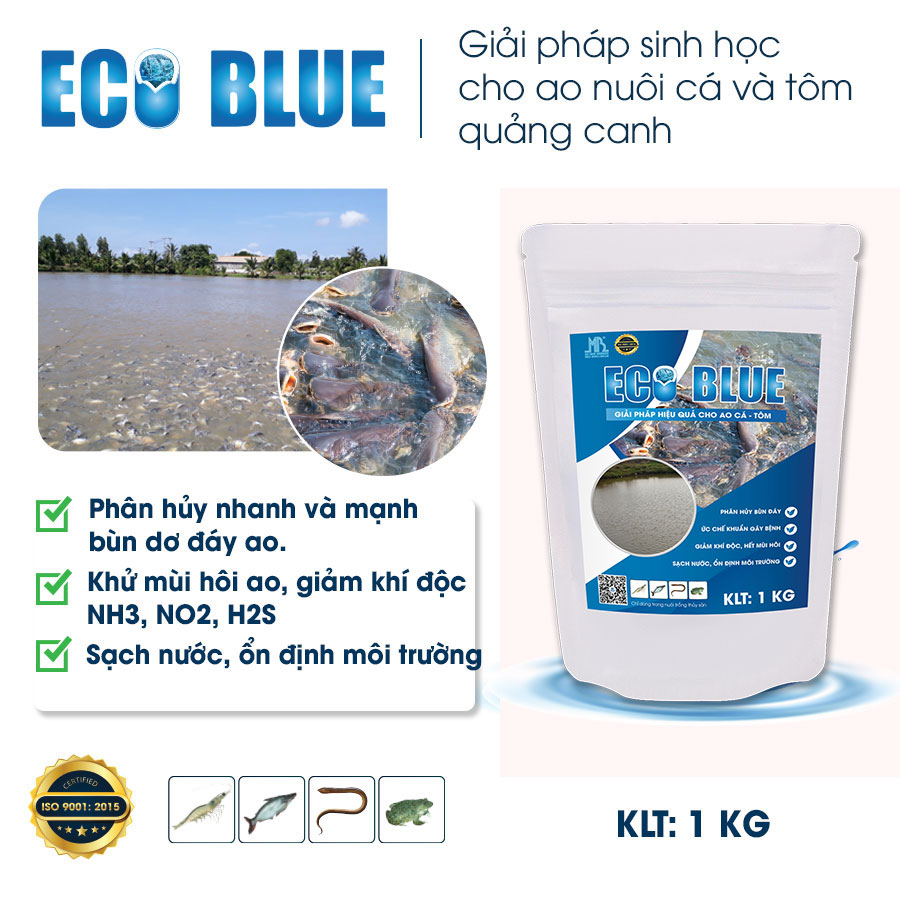
- Water Quality and Pond Bottom Management: Treat pond bottom sludge: Remove excessive thick sludge at the pond bottom to reduce sources of toxic gas generation. Farmers are recommended to use ECO BLUE probiotics to decompose bottom sludge, reduce foul odors, and minimize the accumulation of toxic gases in Mỹ Bình’s culture ponds.
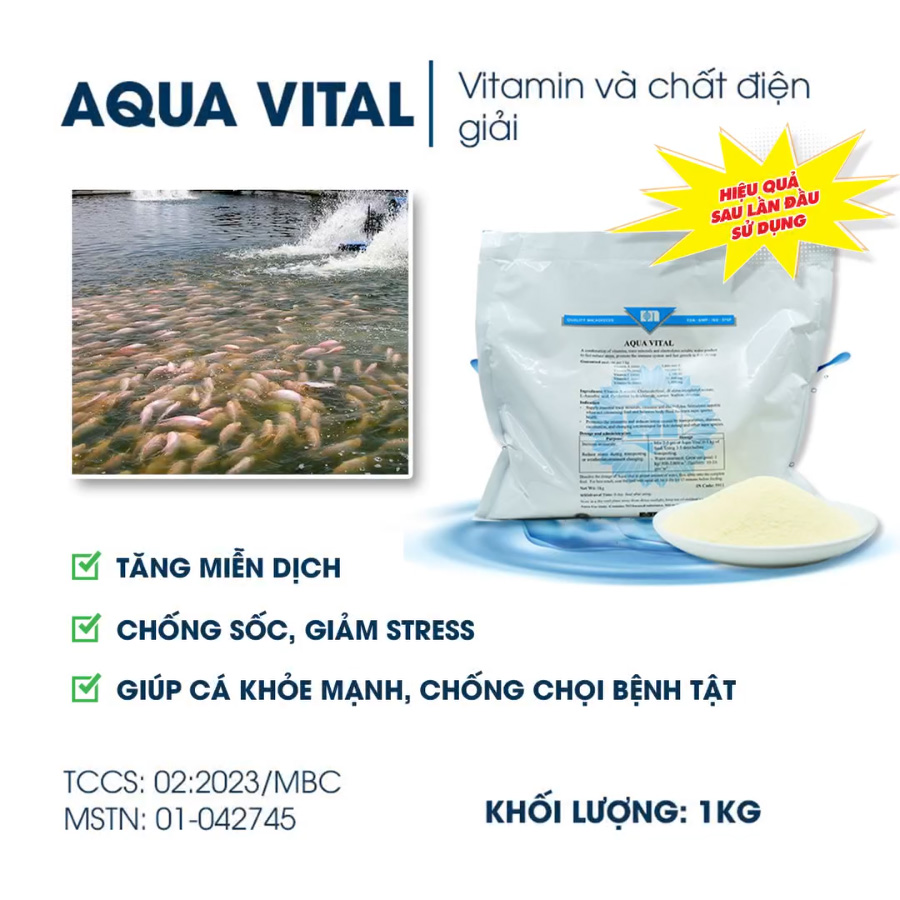
- Enhancing Fish Health: Supplement nutrition by increasing the use of AQUA VITAL (dosage: 5–10 g per feed) to provide minerals, vitamins, and electrolytes before storms, helping improve immunity and shock resistance in fish.
B. Emergency Response Measures (During Stormy Weather)
Suspend or Reduce Feeding: Stop feeding or reduce the feeding rate by 50–70% to prevent uneaten feed from settling at the bottom, which can increase pollution and oxygen consumption.
Increase Oxygen Supply: Operate all aeration systems, paddle wheels, and wave makers continuously. The purpose is to increase dissolved oxygen and mix the water layers to break thermal and chemical stratification.
C. Remedial and Recovery Measures (After the Rain Stops)
- Drain Surface Water: Promptly discharge part of the surface water layer (about 20–30%) that has been acidified and has a low pH due to rainwater. If clean water is available, slowly add new water to the pond to stabilize the environment.
- Maintain Continuous Aeration: Continue running aerators and paddle wheels 24/7 for the first 2–3 days after the rain to ensure sufficient oxygen and proper water circulation.
- After the rain stops, dissolve VIMIX 90 at a dosage of 5 kg per 5,000 m³ of water and evenly broadcast it over the pond surface to supplement minerals and stabilize the buffering system in the water.
- Use ECO BLUE biological products to decompose organic matter, neutralize toxic gases, and clean the pond bottom. Recommended dosage: 1 kg per 10,000 m³ of pond water.
- Enhance Immunity and Disease Prevention: Increase the use of AQUA VITAL (dosage 5–10 g per kg of feed) to supplement minerals, vitamins, and electrolytes before storms in order to enhance immunity and stress resistance in fish.
- Management of Sick/Dead Fish: Promptly collect and remove all dead fish and dispose of them properly according to regulations to prevent the spread of pathogens and water pollution. Closely observe fish behavior, coloration, and swimming patterns to detect early signs of disease and take timely corrective actions.
Mass fish mortality after storms and heavy rain is a complex issue, resulting from multiple environmental changes occurring simultaneously, in which dissolved oxygen depletion plays a key role.
Success during the rainy and stormy season comes from thorough preparation and timely action. Fish farmers need to flexibly apply preventive and comprehensive treatment measures as outlined above, with special emphasis on managing water quality (oxygen levels and pH) and strengthening fish immunity.
For further details, please contact My Binh via hotline +84 939881532 (whatsapp, zalo, line...) for consultation. My Binh is honored to serve you.