


Technical for fish farming

29/06/2026 452 Views
During shrimp farming, minerals play a vital role in shrimp growth, molting, and overall development. However, the early signs of mineral deficiency in shrimp are often difficult to recognize. By the time farmers notice obvious symptoms—such as weak shrimp, slow growth, prolonged soft shells after molting, or increased mortality following molting—the health and performance of the shrimp population have already been significantly affected.

13/05/2026 616 Views
In modern shrimp farming, pond water quality plays a critical role in determining survival rate, growth performance, and the overall profitability of the production cycle. However, many farmers still face common challenges such as unstable water color, organic sludge accumulation on the pond bottom, and elevated levels of toxic gases. These conditions can cause shrimp to grow slowly, become more susceptible to disease, and suffer prolonged mortality losses.

07/05/2026 1504 Views
The rainy season is a challenging period for shrimp ponds due to frequent and sudden fluctuations in water quality parameters. Reduced salinity, unstable pH, elevated toxic gases (especially ammonia and hydrogen sulfide), algal crashes, and the accumulation of organic matter in the pond bottom can cause significant stress to shrimp, leading to reduced feed intake, weakened immunity, and increased susceptibility to disease.
29/04/2026 894 Views
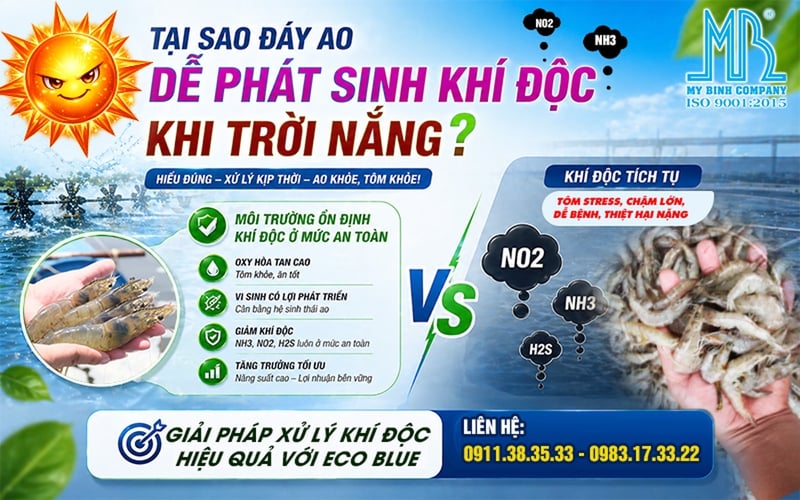
In intensive shrimp farming, toxic gases at the pond bottom are one of the leading causes of reduced feed intake, slow growth, weakened shrimp, and increased risk of disease outbreaks. Especially during prolonged hot weather, the formation of toxic gases such as NH₃, H₂S, and NO₂ at the pond bottom occurs more rapidly and becomes more severe.

23/03/2026 1305 Views
In the context of the aquaculture industry facing numerous challenges—especially the situation of “shrimp prices declining while input costs are rising”—shrimp farmers are under significant economic pressure. The need to invest heavily in disinfecting chemicals, antifungal treatments, and expensive probiotic products is eroding their profits.
24/02/2026 1957 Views
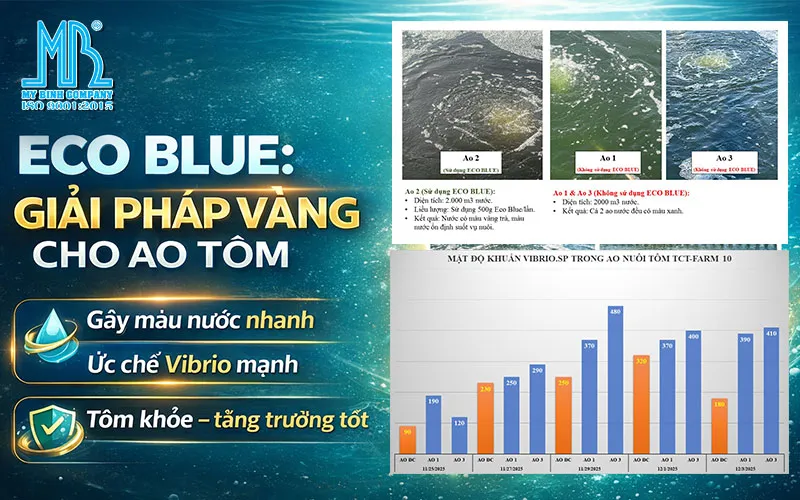
(My Binh) – Based on field surveys conducted at high-tech shrimp farms in Ca Mau, the probiotic product ECO BLUE has demonstrated outstanding effectiveness in stabilizing water color and suppressing Vibrio density to a minimal level, thereby helping shrimp grow healthier and stronger.
30/12/2025 1539 Views
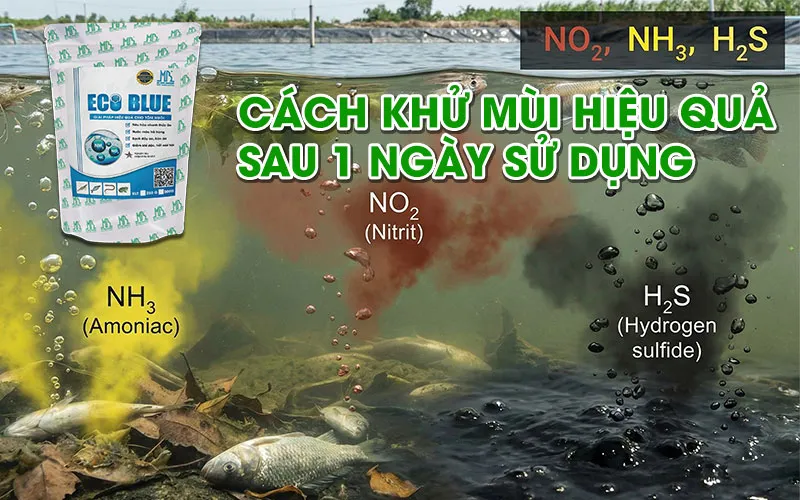
The foul odor coming from aquaculture ponds not only causes discomfort for farm managers but is also a “red alert signal” for the health of shrimp and fish. If not handled promptly, it can become the breeding ground for toxic gases, disease outbreaks, and the failure of an entire farming cycle.

12/11/2025 2363 Views
The rainy and storm season is always the biggest nightmare for aquaculture farmers. After every heavy rainfall or prolonged storm and flooding, mass fish mortality often occurs, with dead fish floating across ponds and cages, causing severe economic losses and, in many cases, leaving farmers completely devastated.
18/09/2025 1503 Views
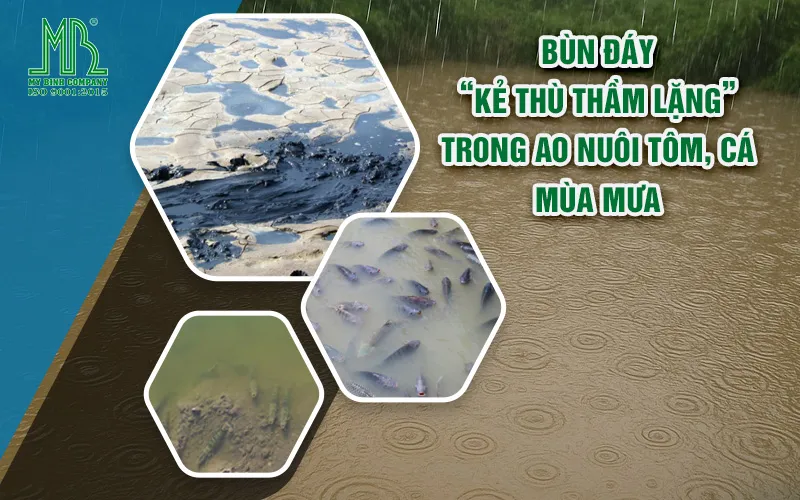
Rainwater and accumulated sludge not only pollute pond water but also seriously affect the health of shrimp and fish in aquaculture ponds, causing environmental stress, poisoning, rapid bacterial growth, and making cultured shrimp and fish more susceptible to diseases. So what is the effective solution to help shrimp and fish stay healthy during the rainy season?
12/09/2025 2096 Views
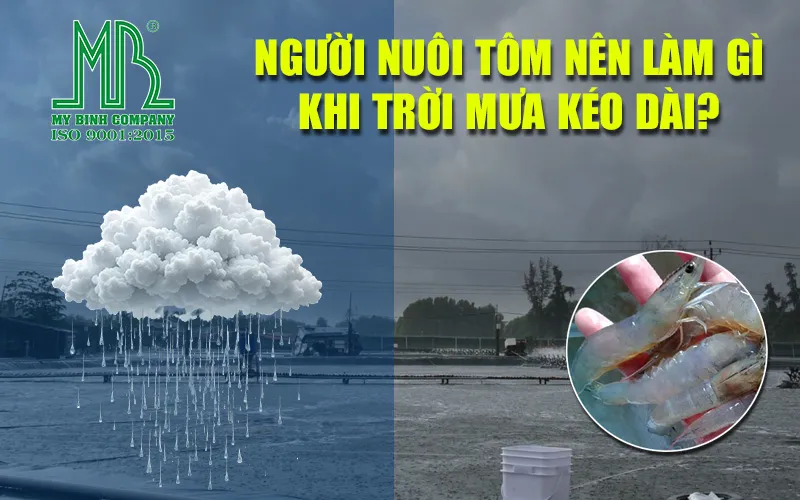
The prolonged rainy season poses many risks to shrimp ponds: pH drops, algal die-off occurs, toxic gases increase, and shrimp are more susceptible to environmental stress, slow growth, body curvature, and muscle opacity. Farmers need to manage their ponds carefully, maintain shrimp health, and apply timely treatment solutions. The article below will help farmers find effective solutions.
22/07/2025 2891 Views
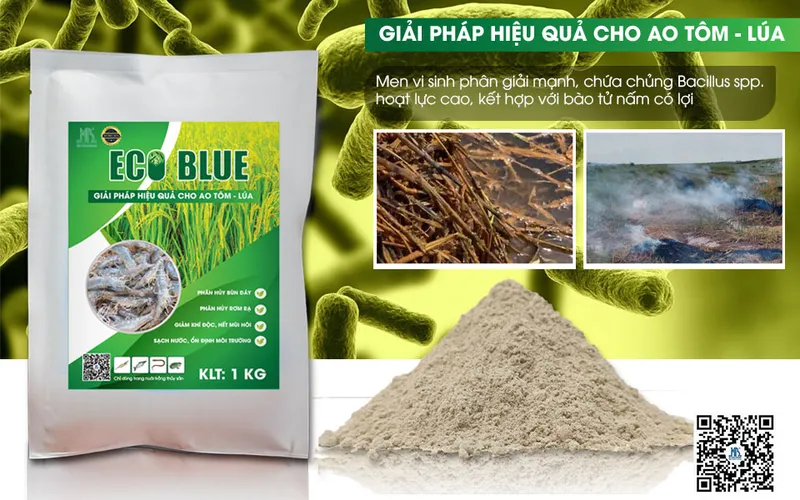
The rice–shrimp rotational (or integrated) farming model is a widely adopted sustainable agricultural practice in the Mekong Delta, particularly in the provinces of Bac Lieu, Ca Mau, Soc Trang, and Kien Giang. This model alternates between the saline water season and the freshwater season, making the most of natural conditions, reducing investment costs, and minimizing pollution and disease risks.