


Signs of Mineral Deficiency in Shrimp: How to Identify Early Symptoms and Improve Shrimp Health with Organic Minerals for Shrimp
During shrimp farming, minerals play a vital role in shrimp growth, molting, and overall development. However, the early signs of mineral deficiency in shrimp are often difficult to recognize. By the time farmers notice obvious symptoms—such as weak shrimp, slow growth, prolonged soft shells after molting, or increased mortality following molting—the health and performance of the shrimp population have already been significantly affected.
So, how can you identify the early signs of mineral deficiency in shrimp? And how should you provide organic minerals for shrimp and vitamins and minerals for shrimp to promote healthy growth, support faster molting and hard shell formation in shrimp, and minimize risks throughout the production cycle?
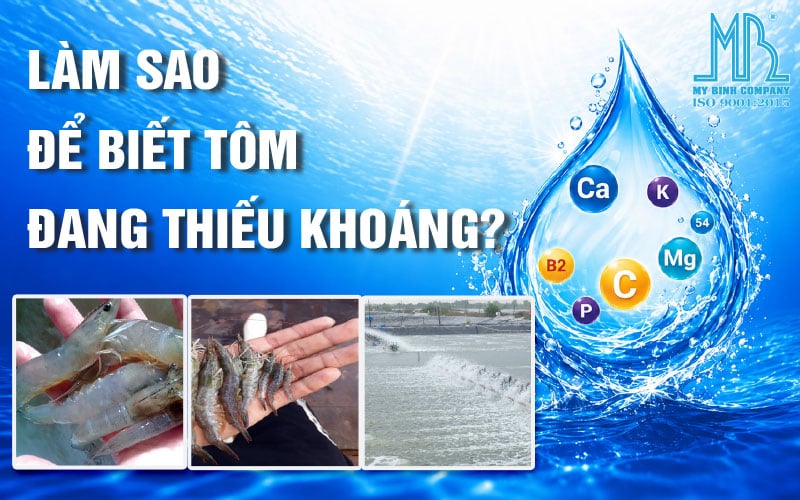
1. Why Are Minerals Important for Shrimp?
Minerals are an essential nutrient group that helps shrimp maintain critical physiological functions, such as shell formation, osmotic pressure balance, metabolic support, and enhanced adaptability to the pond environment.
In particular, after each molting cycle, shrimp require a specific amount of minerals to rapidly form a strong new shell. If minerals are deficient, the shell-hardening process slows down, leaving the shrimp weak and reducing their resilience to environmental stress.
Furthermore, under intensive farming conditions—characterized by high stocking densities, unpredictable weather changes, or heavy rainfall—mineral levels in the pond can fluctuate, making shrimp prone to stress and compromised overall health.
2. Signs of Mineral Deficiency in Shrimp
2.1 Difficulty Molting and Prolonged Soft-Shell Status
One of the most common signs of mineral deficiency in shrimp is trouble during the molting process. After molting, shrimp must absorb minerals from their surrounding environment to quickly harden their new shell.
When mineral levels are insufficient, shrimp may exhibit the following symptoms:
- Prolonged soft shells after molting
- Lethargic swimming and reduced activity
- High sensitivity to environmental changes
- Increased mortality risk post-molt
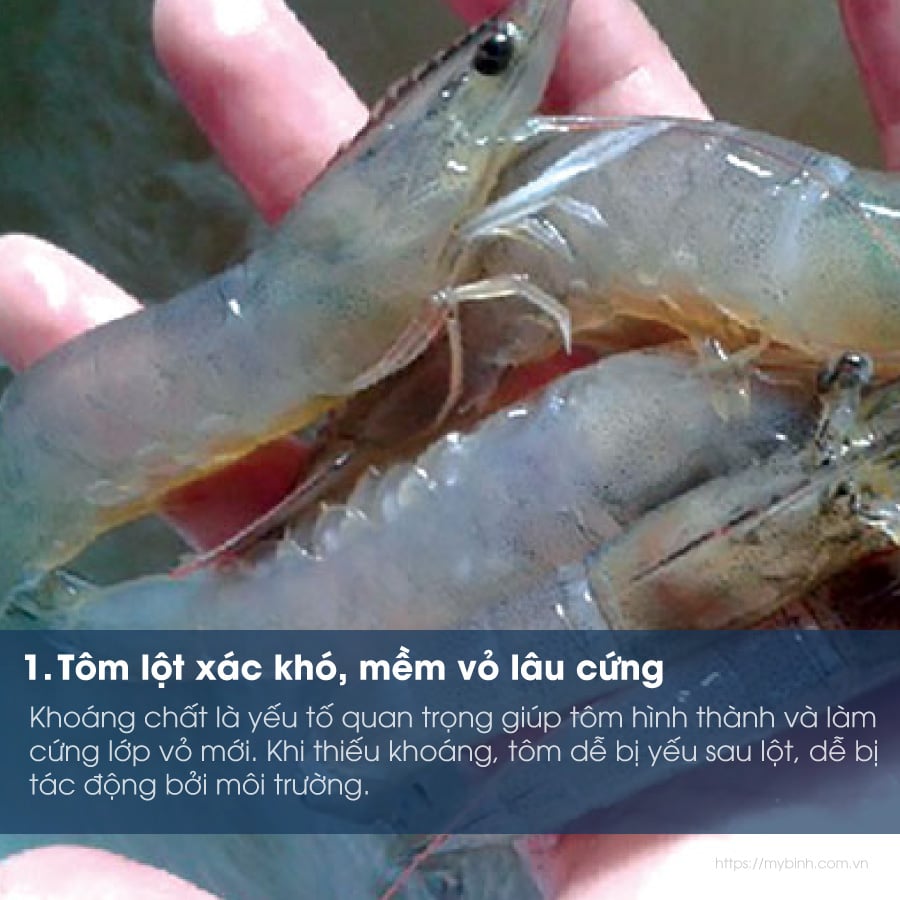
The post-molting stage is a highly sensitive period for shrimp. Without adequate nutritional support, shrimp may take a long time to recover, directly impacting their growth rate.
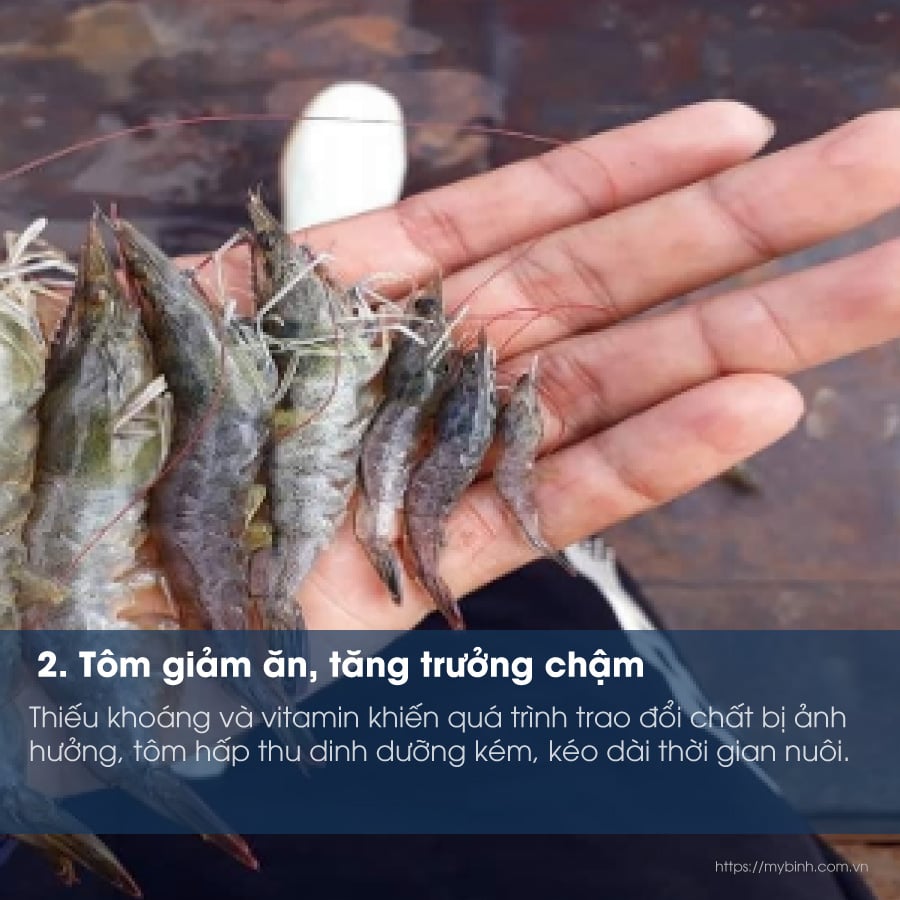
2.2 Reduced Feed Intake and Slow Growth
Minerals not only affect the shell structure but are also vital to the internal metabolic processes of shrimp.
When shrimp suffer from a mineral deficiency, their nutrient absorption capacity can decline, leading to:
- Decreased feed intake (shrimp eating less than usual)
- Slow growth rate
- Underwhelming size relative to expectations
- Extended culture period (longer farming cycle)
In the same pond, healthier shrimp will grow faster, while weaker ones fall behind, resulting in size variation across the stock.
2.3 Uneven Shrimp Size
A healthy shrimp population typically exhibits relatively uniform sizing. However, when minerals are lacking or nutrition is imbalanced, growth rates can vary significantly among individuals.
Stronger shrimp that absorb nutrients effectively will grow rapidly, whereas weaker ones lag behind. This creates size variation (size disparity) within the pond, reducing feed conversion efficiency and ultimately lowering the final yield.
2.4 Shrimp Become Weak During Weather Changes
Heavy rain, temperature fluctuations, or sudden changes in environmental factors can all cause stress in shrimp.
In particular, when conditions in the farm pond change abruptly, shrimp need a strong baseline health status to adapt. If they lack essential minerals and vitamins, they are prone to showing the following signs:
- Lethargic swimming
- Reduced activity
- Poor feeding / Loss of appetite
- Decreased resistance / Weakened immune system
Therefore, proactively supplementing minerals for shrimp throughout the culture cycle helps maintain stable health and minimizes the negative impacts of environmental stress.

3. How to Effectively Supplement Minerals for Shrimp?
To prevent mineral deficiency in shrimp, farmers need to provide regular mineral supplements combined with a suitable nutritional regimen. However, not all types of minerals are easily absorbed.
- An effective mineral product should ensure the following:
- High bioavailability (easily absorbed minerals)
- Suitability for the growth requirements of shrimp
- A combination of nutrients that support health recovery
- Enhanced stability for shrimp during sensitive stages, such as post-molting or during environmental fluctuations
BLUESEA – Organic Vitamin & Mineral Solution for Inner Shrimp Health
BLUESEA is an organic vitamin and mineral product for shrimp, developed to supplement essential minerals combined with vital vitamins. It helps enhance absorption efficiency and supports shrimp health recovery.
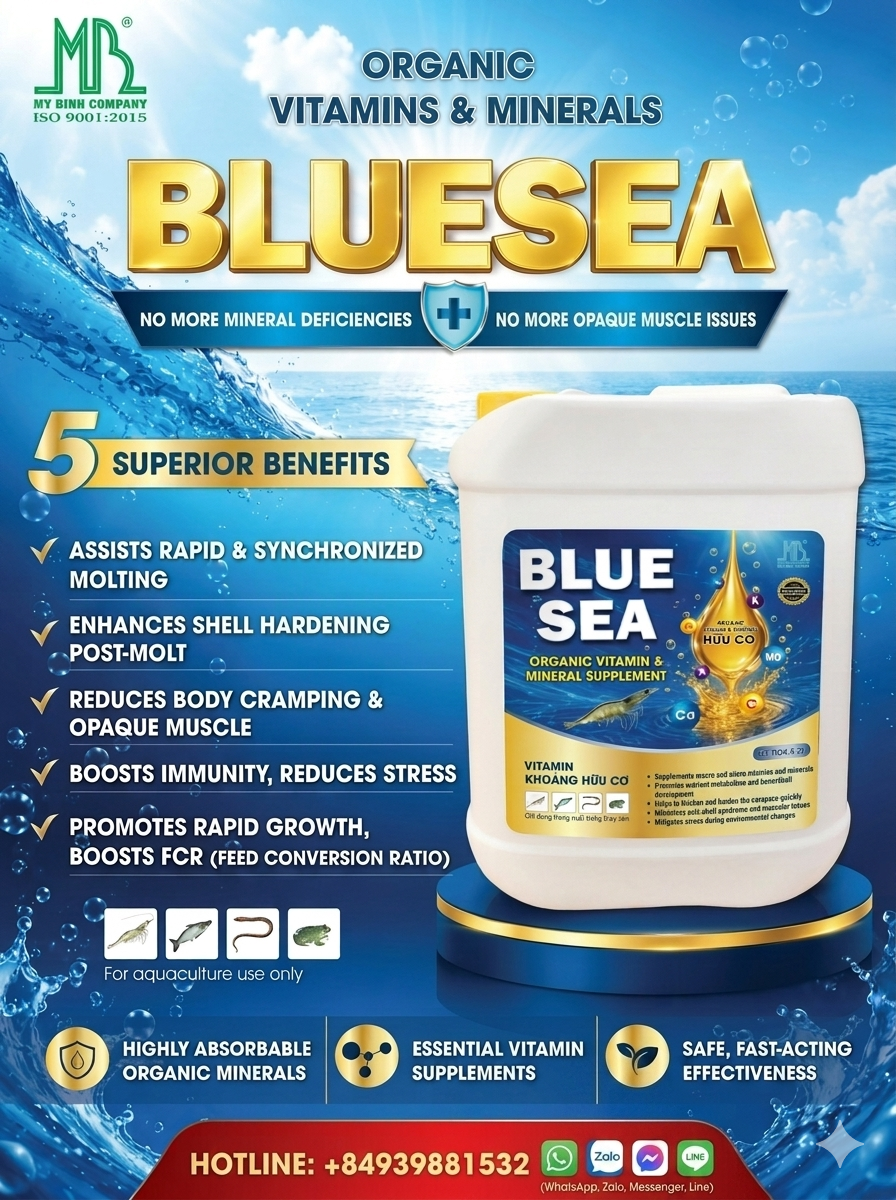
BLUESEA – Organic Vitamins & Minerals Help:
✅ Support rapid and synchronized shrimp molting
✅ Accelerate shell hardening post-molt
✅ Reduce the risk of cramped body and white feces/muscle necrosis
✅ Boost immunity and reduce stress caused by environmental changes
✅ Promote uniform growth and improve feed conversion efficiency
Especially during critical periods—such as after rain, post-molting, or when shrimp show signs of weakness—timely supplementation of the right minerals helps maintain stable health and optimal growth.
Don’t wait until shrimp suffer from slow growth, soft shells, or high mortality to take action. Monitoring for abnormal signs and supplementing minerals at the right time are key steps to maximizing your farming efficiency.
BLUESEA – Organic Vitamins & Minerals for Shrimp, accompanying farmers in building a healthy, fast-growing, and high-yielding shrimp stock.
📞 Consultation Hotline: +84939881532 (WhatsApp, Line, Zalo, Messenger)