


Stressed Shrimp: Early Detection and Timely Management to Protect Farm Productivity
- So, how can farmers recognize stressed shrimp, and what should they do when shrimp show abnormal signs?
- Stressed Shrimp – A Small Problem That Can Lead to Major Losses
- Under these conditions, stressed shrimp may show several recognizable signs, including:
- Why Is Prolonged Stress in Shrimp a Serious Concern?
- What Should You Do When Shrimp Show Signs of Stress?
- BLUESEA – Supporting Shrimp Recovery During Stress
- How to Use BLUESEA in Shrimp Farming
- Don't Wait Until Shrimp Stop Feeding Before Taking Action Against Stress
During the culture cycle, shrimp stress is a condition that farmers should not overlook. Heavy rainfall, sudden weather changes, prolonged hot weather, or fluctuations in water quality can all cause environmental stress and shock in shrimp.
Stressed Shrimp: Early Detection and Timely Management to Protect Farm Productivity
One of the most concerning aspects of stress in shrimp is that it does not always cause immediate losses. At first, stressed shrimp may simply show reduced feed intake, weak swimming activity, or abnormal behavior. However, if stress is not detected and managed early, the overall health of the shrimp population may deteriorate, increasing the risk of health problems and directly affecting growth rate and final farm productivity.
So, how can farmers recognize stressed shrimp, and what should they do when shrimp show abnormal signs?
Stressed Shrimp – A Small Problem That Can Lead to Major Losses
Shrimp are highly sensitive to changes in pond conditions. When environmental parameters such as temperature, pH, alkalinity, or dissolved oxygen (DO) fluctuate significantly, shrimp must continuously adapt to the changing conditions.
This is especially important after heavy rainfall or sudden weather changes, when pond water quality can change rapidly. If the pond contains high levels of organic matter, uneaten feed, or toxic gases, the environmental stress on the shrimp population can become even greater.
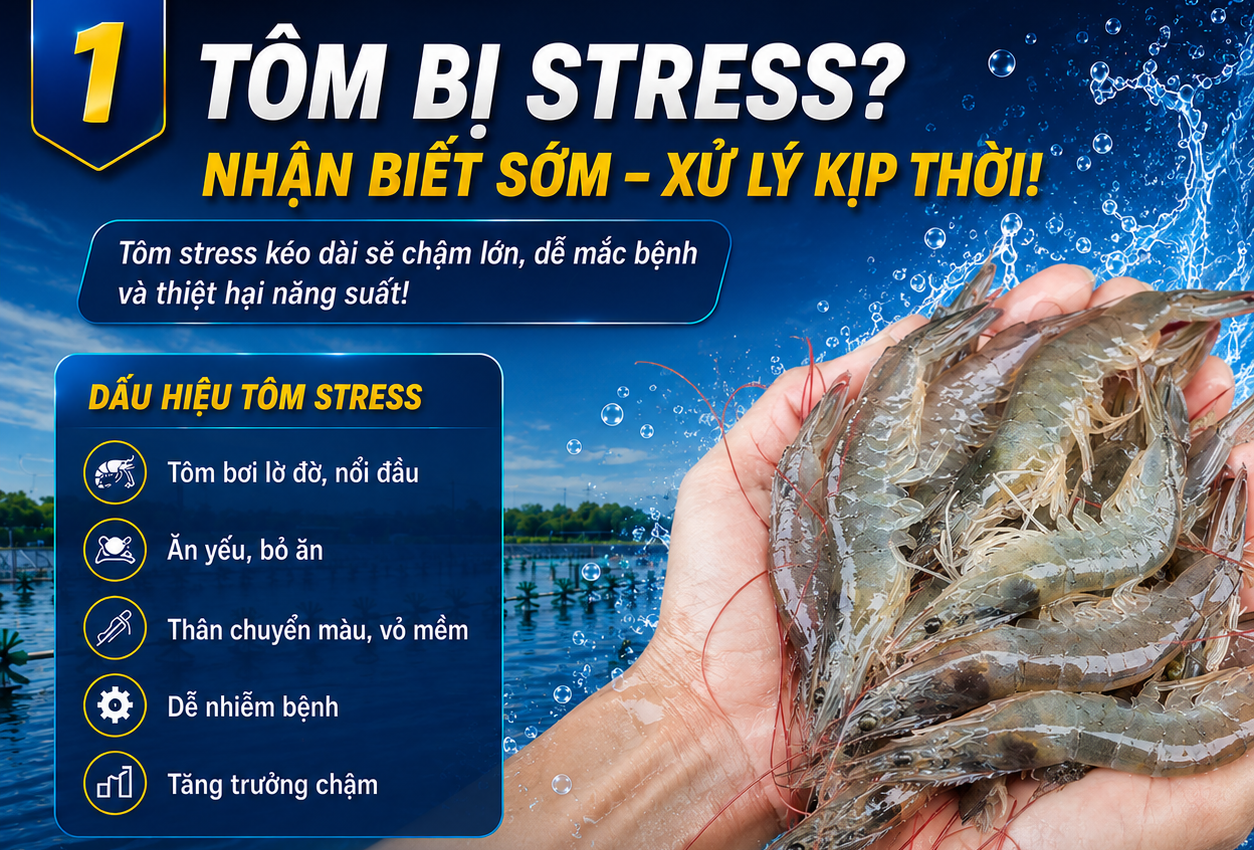
Under these conditions, stressed shrimp may show several recognizable signs, including:
- Shrimp become lethargic, slow to respond, or show surface swimming behavior.
- Shrimp show reduced feed intake, weak feeding activity, or stop feeding.
- Shrimp may develop abnormal body coloration or soft shells.
- Shrimp become weaker and more susceptible to health problems.
- Shrimp show slow growth and fail to reach the expected market size.
Among these signs, reduced feed intake or feed refusal is one of the key indicators that farmers should monitor closely. If feed consumption suddenly decreases after rainfall, sudden weather changes, or an environmental disturbance, do not simply assume that the shrimp are “not hungry.” It may be an early signal that the shrimp population is experiencing environmental stress.
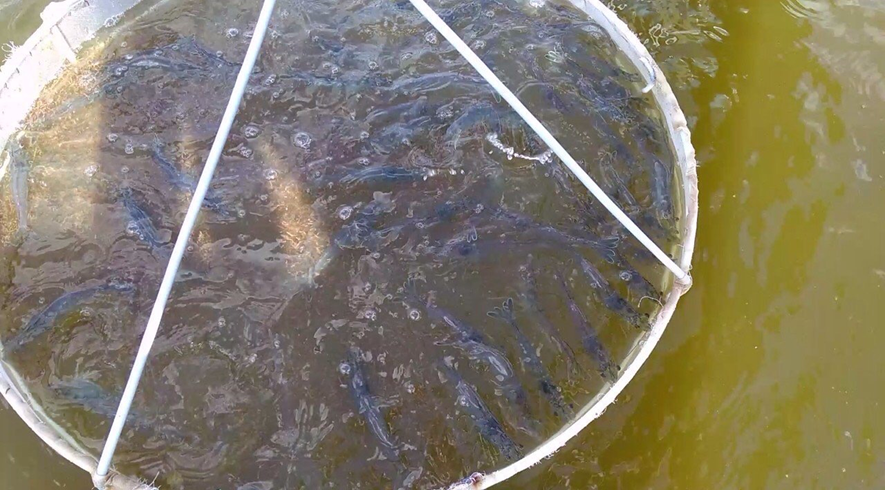
Stressed Shrimp Showing Lethargic Swimming Behavior During Tray Checks
Why Is Prolonged Stress in Shrimp a Serious Concern?
Stress does not simply cause shrimp to reduce their feed intake for a few meals. If the underlying cause is not controlled, stress can persist and trigger a series of subsequent problems.
Reduced feed intake means lower nutrient intake and absorption. As shrimp become weaker, their ability to cope with adverse environmental conditions may also decline.
In addition, uneaten feed, waste, and accumulated organic matter can further deteriorate pond water quality. Under poorly managed conditions, toxic compounds such as NH₃, NO₂⁻, and H₂S may increase, placing additional stress on the shrimp population.
An initial environmental fluctuation can therefore create a vicious cycle in the pond:
Environmental fluctuations → shrimp stress → reduced feed intake and weakened condition → further deterioration of water quality → increased susceptibility to health problems.
If action is delayed, the consequences may extend beyond shrimp health, affecting growth rate, culture duration, production costs, and overall farm productivity.
Therefore, an important principle in shrimp stress management is:
Detect early – identify the underlying cause – take timely corrective action.
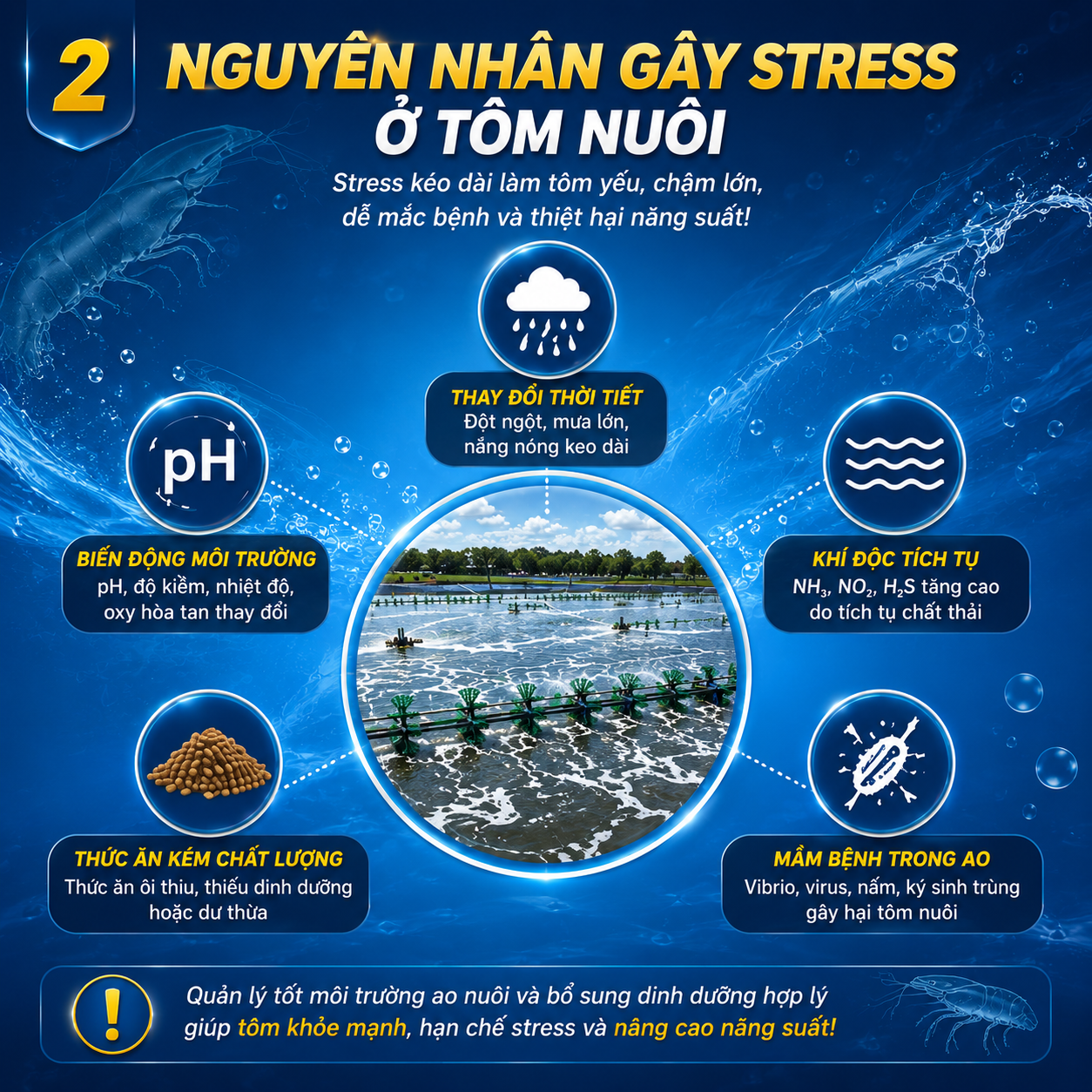
Causes of Stress in Farmed Shrimp
What Should You Do When Shrimp Show Signs of Stress?
When shrimp show abnormal signs, farmers should first check the pond water quality and environmental conditions. Particular attention should be paid to key parameters such as pH, alkalinity, temperature, dissolved oxygen (DO), and the level of organic matter in the pond.
After heavy rainfall or sudden weather changes, it is especially important to closely monitor shrimp activity and feed intake.
In addition to maintaining stable pond conditions, another important aspect is supporting shrimp recovery after stress.
When shrimp are under stress or weakened, their feeding activity and ability to digest and absorb nutrients may not be as efficient as normal. Therefore, appropriate vitamin and mineral supplementation can be an important part of a comprehensive shrimp health management strategy, providing essential nutrients during periods when shrimp are affected by environmental stress.
BLUESEA – Supporting Shrimp Recovery During Stress
This is one reason why many shrimp farmers choose to supplement BLUESEA – vitamins & organic minerals during periods when shrimp are more susceptible to stress.
BLUESEA is formulated to provide vitamins and organic minerals, supporting:
- Shrimp health and resilience, helping shrimp maintain good condition and better withstand environmental stress.
- Stress management, particularly during periods of environmental fluctuations.
- Digestive function, supporting better feed utilization and nutrient absorption.
- Molting and shell hardening, contributing to overall shrimp health and growth performance.
- Nutritional support for shrimp recovery and healthy growth.
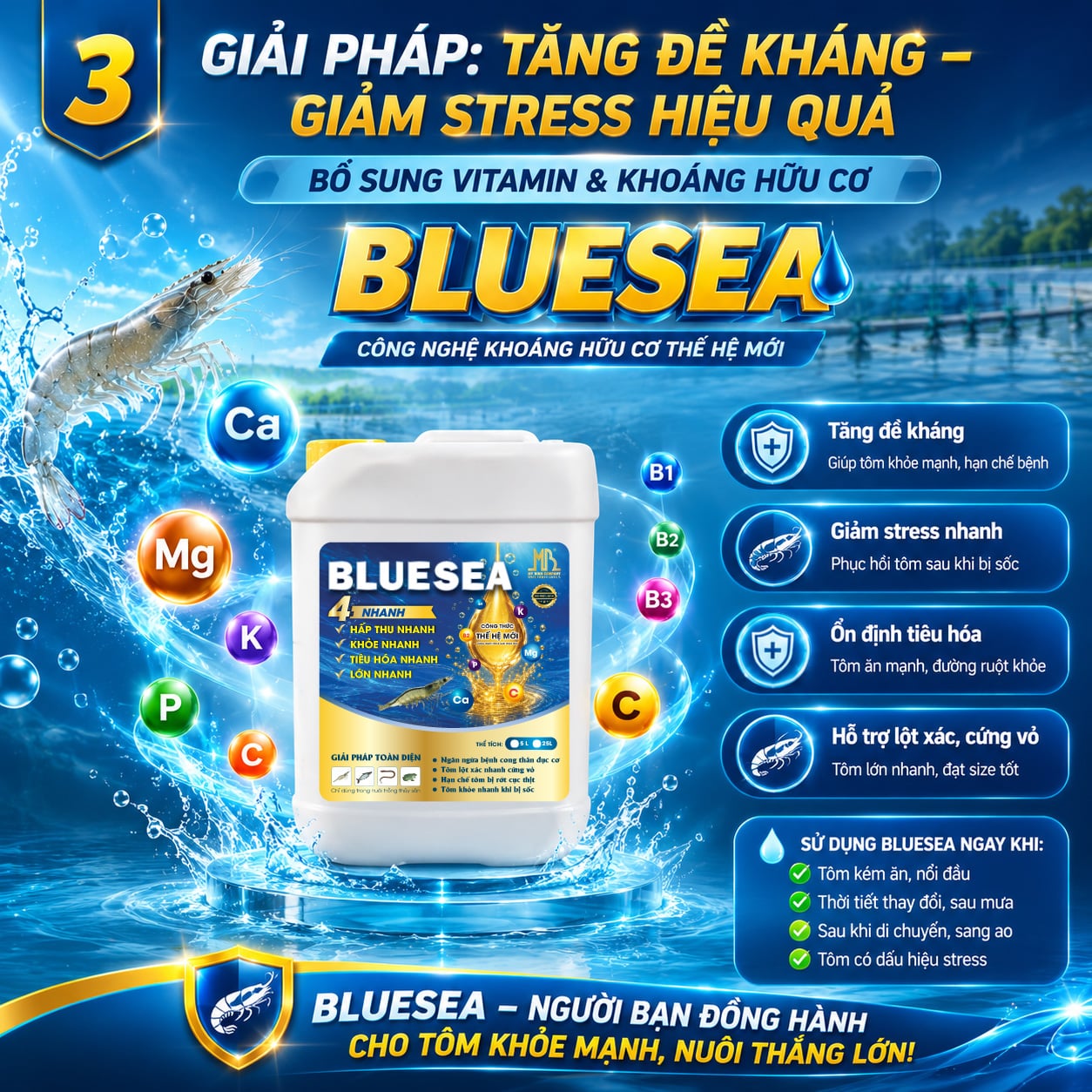
A Solution to Support Shrimp Resistance and Reduce Stress in Farmed Shrimp
BLUESEA is particularly suitable for consideration during periods when farmed shrimp are more susceptible to stress, such as after rainfall, during weather fluctuations, when shrimp show reduced feed intake, after transfer to another pond, or when signs of stress are observed.
How to Use BLUESEA in Shrimp Farming
According to the product-use guidelines provided, BLUESEA can be applied in two ways:
1. Feed application: Mix 10–20 mL of BLUESEA per kg of feed, feed 2–3 times per day, and continue throughout the production cycle.
2. Pond application: Apply 1 liter per 500–1,000 m³ of pond water, at intervals of every 3–5 days.
Farmers should follow the recommended dosage and application instructions on the product label and consider the actual conditions of the pond when selecting the most appropriate application method.
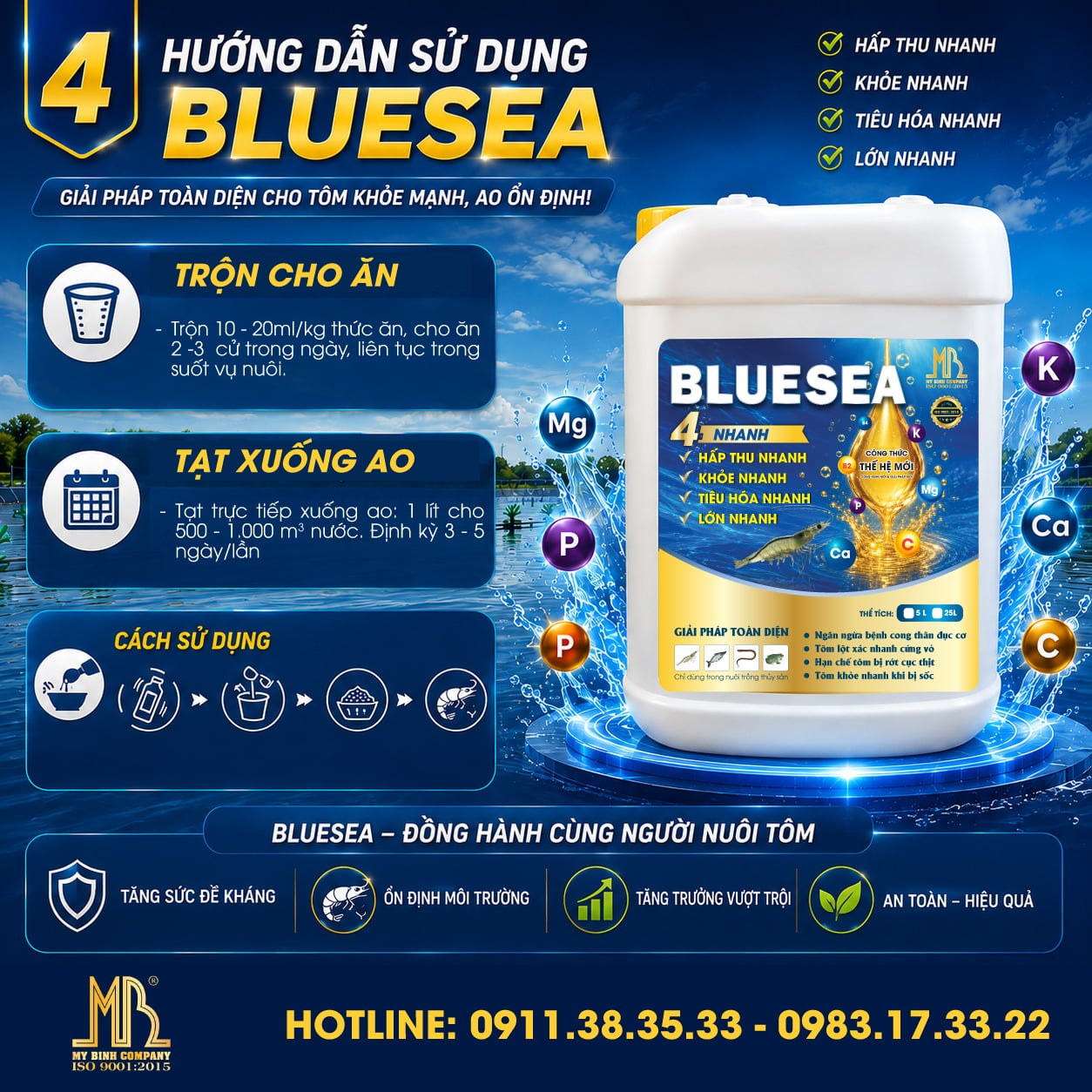
How to Use BLUESEA to Support Shrimp During Stress
Don't Wait Until Shrimp Stop Feeding Before Taking Action Against Stress
In shrimp farming, early intervention is always better than allowing stress to persist. Especially after heavy rainfall, sudden weather changes, or when shrimp show signs of reduced feed intake, farmers should check pond conditions and closely monitor the shrimp immediately.
A healthy shrimp population depends not only on feed but also on stable water conditions and an appropriate nutritional program.
Early detection – stabilizing the pond environment – and timely nutritional support are key to proactively minimizing unnecessary losses associated with stress.
BLUESEA – Your Partner for Healthier Shrimp and More Successful Farming!
For further information about BLUESEA and its recommended application, please contact us for consultation.
............................................................
MY BINH EXPORT-IMPORT TRADING LIMITED COMPANY
📲 Hotline: +84939881532 (WhatsApp, Line, Messenger, Zalo)
🌐 Website: https://mybinh.com.vn
🏢 Head Office: 49/11B Tran Hoang Na Street, Tan An Ward, Can Tho City, Vietnam.
🏭 Manufacturing Factory: 28T Nguyen Van Quy Street, Hung Phu Ward, Can Tho City, Vietnam.