


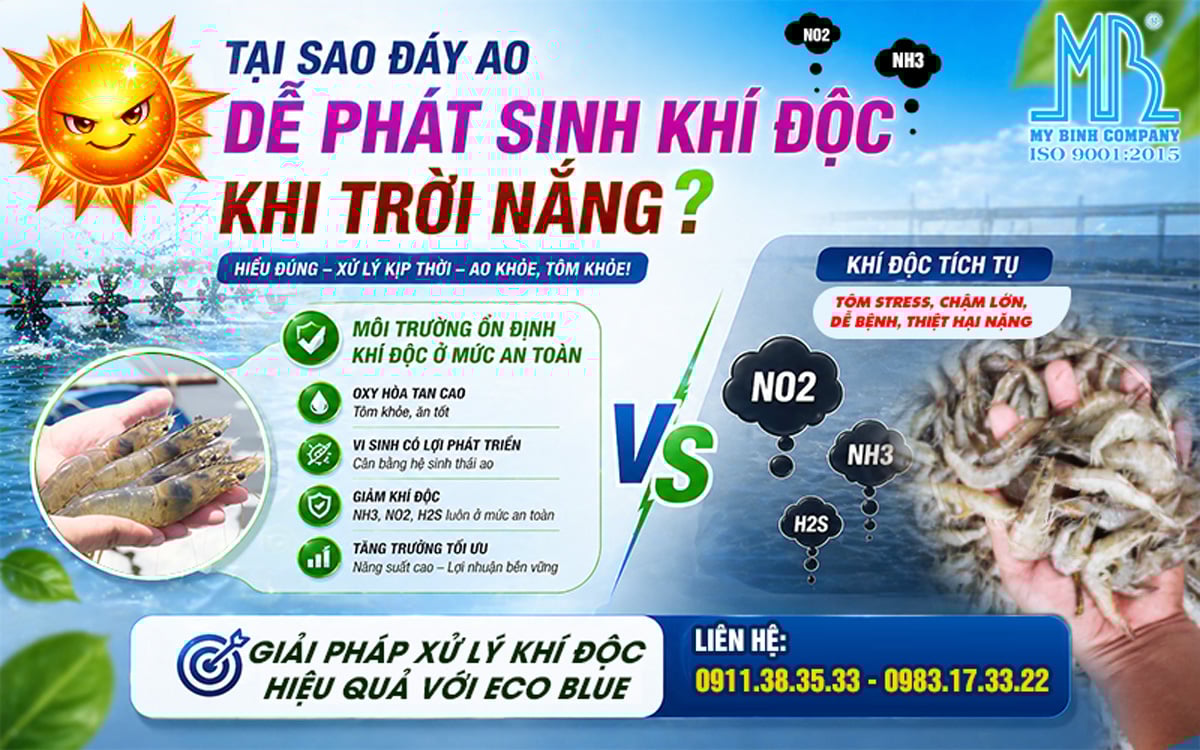
Why toxic gases increase in pond bottom during hot weather? Effective solution with ECO BLUE
- Why Does the Pond Bottom Easily Generate Toxic Gases During Hot Weather?
- 1. High temperature accelerates the decomposition of organic matter
- 2. Bottom dissolved oxygen drops sharply, promoting anaerobic bacterial growth
- 3. Algal bloom and die-off lead to pond bottom pollution
- 4. Uneaten feed accumulates more during hot weather
- How Do Toxic Gases at the Pond Bottom Affect Shrimp?
- Effective Treatment of Pond Bottom Toxic Gases with ECO BLUE Probiotics
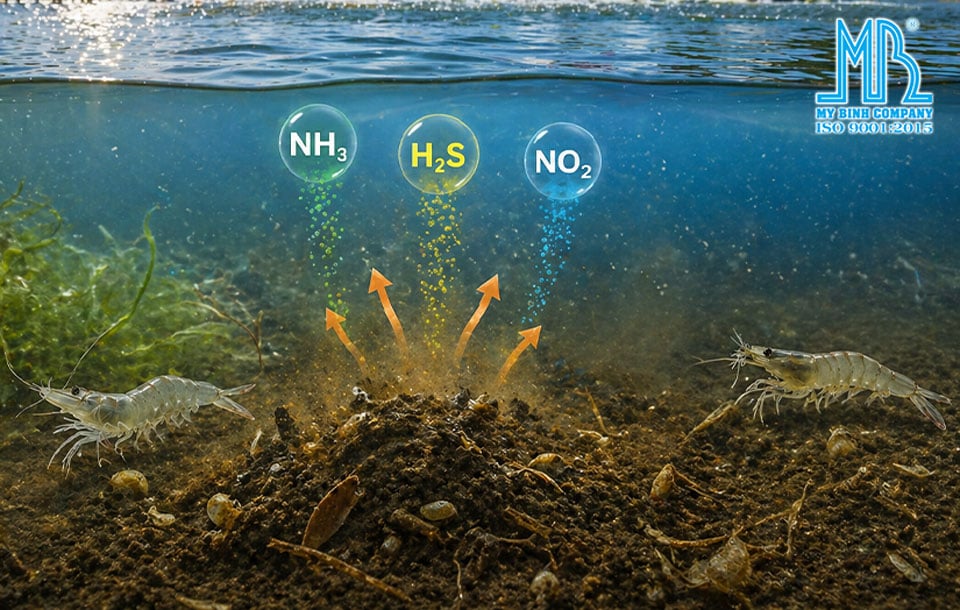
In intensive shrimp farming, toxic gases at the pond bottom are one of the leading causes of reduced feed intake, slow growth, weakened shrimp, and increased risk of disease outbreaks. Especially during prolonged hot weather, the formation of toxic gases such as NH₃, H₂S, and NO₂ at the pond bottom occurs more rapidly and becomes more severe.
Many ponds may appear normal on the surface, but the bottom layer has already begun accumulating toxic gases. This leads to prolonged stress in shrimp, reduced immunity, and directly impacts the overall performance of the farming cycle.
So, why does the pond bottom easily generate toxic gases during hot weather? And what are the effective solutions to control this issue? Let’s explore in detail.
Why Does the Pond Bottom Easily Generate Toxic Gases During Hot Weather?
1. High temperature accelerates the decomposition of organic matter
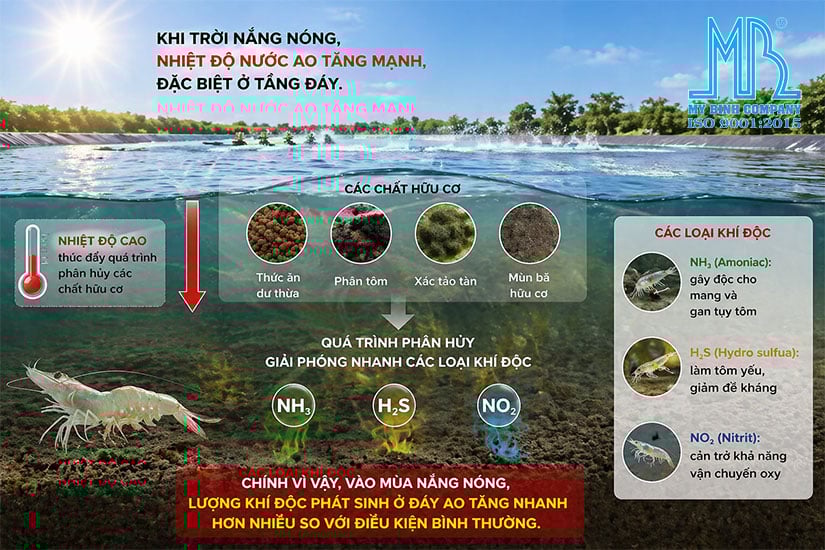
During hot and sunny conditions, pond water temperature rises significantly, especially at the bottom layer. High temperatures stimulate the rapid decomposition of organic materials such as:
- Uneaten feed
- Shrimp waste
- Dead algae
- Organic sludge and debris
This process quickly releases toxic gases, including:
- NH₃ (Ammonia): toxic to shrimp gills and hepatopancreas
- H₂S (Hydrogen sulfide): weakens shrimp and reduces immunity
- NO₂ (Nitrite): interferes with oxygen transport
As a result, during hot seasons, the accumulation of toxic gases at the pond bottom increases much faster than under normal conditions.
2. Bottom dissolved oxygen drops sharply, promoting anaerobic bacterial growth
Hot weather reduces dissolved oxygen levels in the water, especially at the pond bottom.
When the pond bottom becomes oxygen-deficient:
- Beneficial bacteria become less active
- Anaerobic bacteria proliferate rapidly
- Decomposition processes generate more toxic gases
At this stage, the pond bottom often shows the following signs:
- Black sludge accumulation
- Foul, fishy odor
- Increased bottom slime
These are typical indicators that toxic gases are accumulating at the pond bottom and timely treatment is required.
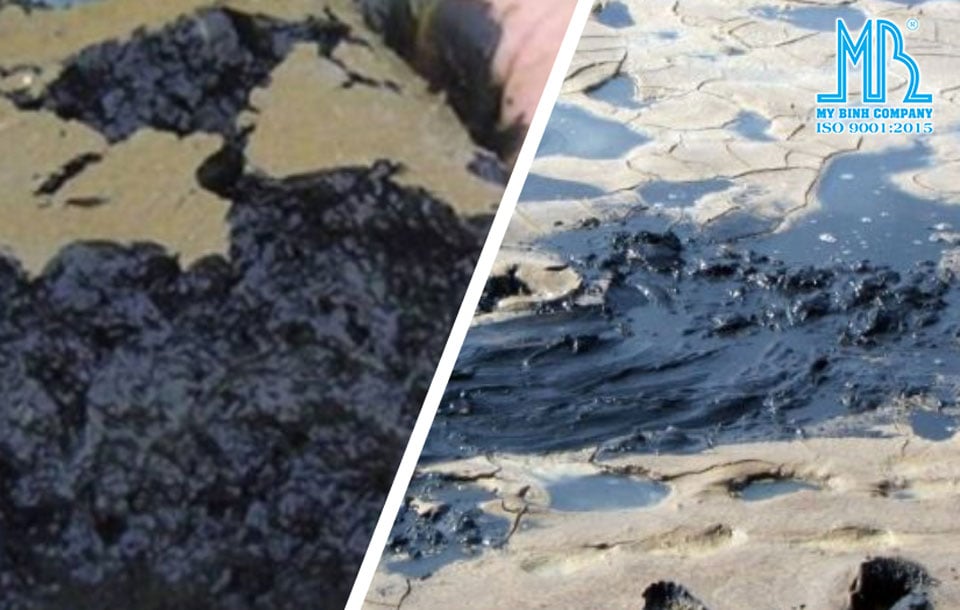
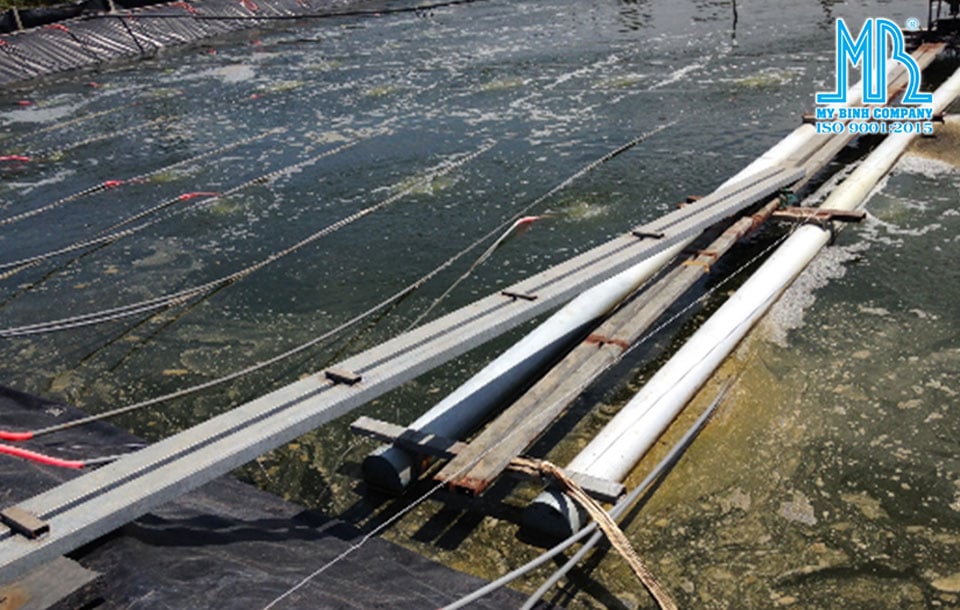
The shrimp pond bottom is covered with black, foul-smelling sludge
3. Algal bloom and die-off lead to pond bottom pollution
Under hot weather conditions, algae grow rapidly. However, when algal density becomes too high, sudden die-offs are likely to occur.
When algae die:
- Dead algae settle to the pond bottom
- Organic matter accumulation increases
- A large amount of oxygen is consumed during decomposition
- Toxic gases are generated more intensively
This causes significant fluctuations in the pond environment, making shrimp more prone to stress and reducing their immunity.
4. Uneaten feed accumulates more during hot weather
When temperatures rise, shrimp often reduce their feeding due to heat stress. If farmers do not properly adjust feeding rates, excess feed will settle at the bottom and decompose, generating toxic gases.
This commonly leads to:
- Rapid increase in NH₃
- Dirty pond bottom
- Prolonged reduction in shrimp feeding
Therefore, proper feed management during hot seasons is a critical factor in minimizing toxic gas buildup at the pond bottom.
How Do Toxic Gases at the Pond Bottom Affect Shrimp?
When toxic gases increase, shrimp may show the following signs:
- Reduced feed intake
- Surfacing in the early morning
- Slow growth
- Soft shells
- Weak hepatopancreas
- Increased susceptibility to intestinal diseases
If not treated in time, toxic gases at the pond bottom can reduce survival rate, increase feed conversion ratio (FCR), and seriously impact farm profitability.
Effective Treatment of Pond Bottom Toxic Gases with ECO BLUE Probiotics
To control toxic gases under hot weather conditions, an effective solution should:
- Rapidly decompose organic matter at the pond bottom
- Reduce NH₃, H₂S, and NO₂ levels
- Stabilize water quality
- Minimize sludge and biofilm buildup at the pond bottom
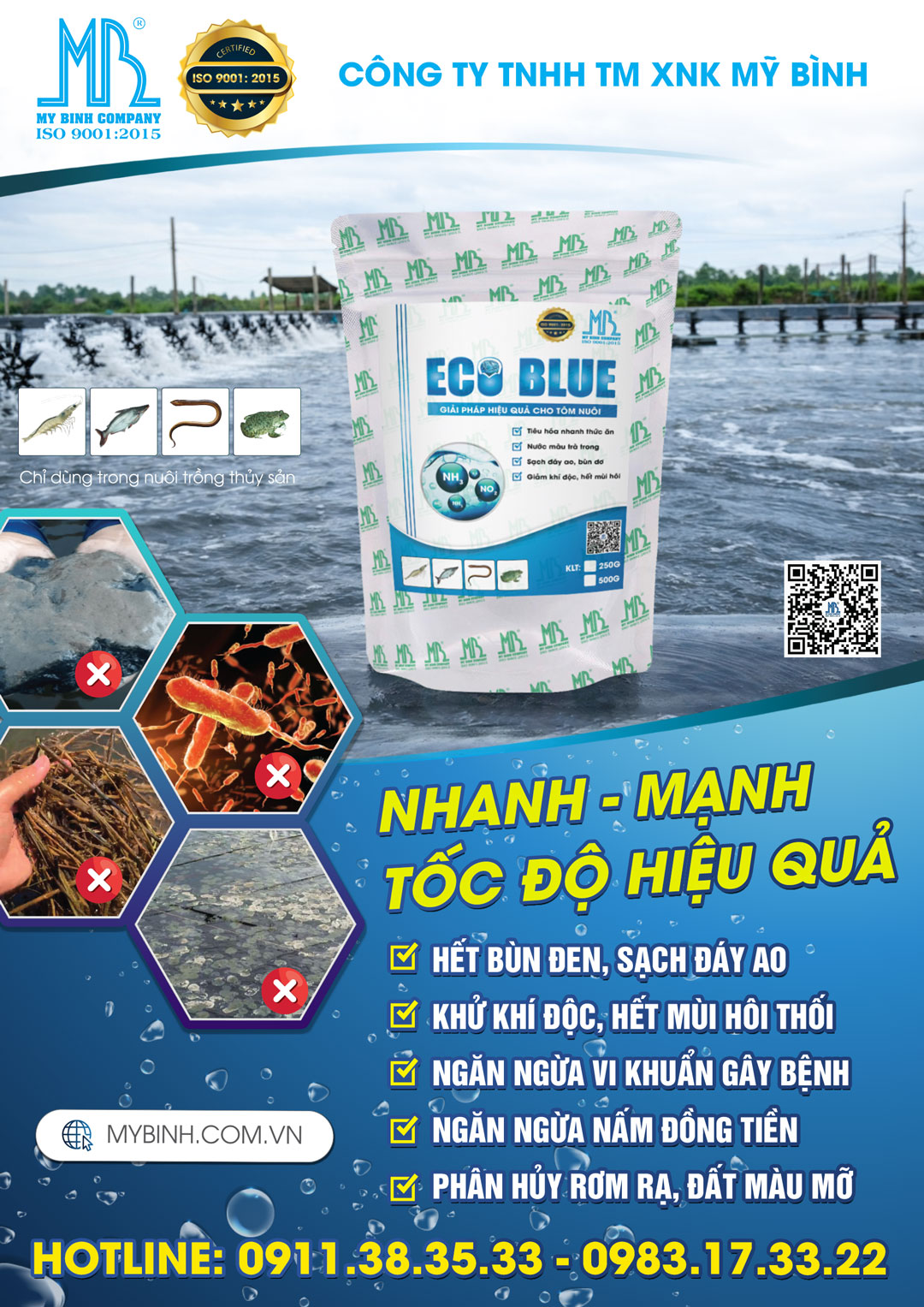
ECO BLUE is an effective solution for pond bottom treatment, helping to improve the aquaculture environment during hot weather conditions.
Key Benefits of ECO BLUE
- Supports the decomposition of organic sludge at the pond bottom
- Reduces toxic gases such as NH₃, H₂S, and NO₂
- Cleans the pond bottom and minimizes sludge accumulation
- Stabilizes water quality
- Promotes healthier shrimp and better growth performance
- Inhibits harmful bacteria and fungal infections (coin-like fungus) in shrimp ponds
ECO BLUE is a suitable solution for intensive shrimp farming ponds, especially during prolonged hot weather periods.
Conclusion:
Pond bottoms are prone to generating toxic gases during hot weather because high temperatures accelerate organic decomposition, reduce dissolved oxygen at the bottom, and promote the rapid growth of anaerobic bacteria. If not properly controlled, these toxic gases can cause shrimp to eat less, grow slowly, and increase the risk of disease outbreaks.
An effective solution is to proactively treat the pond bottom on a regular basis using ECO BLUE probiotics, which help reduce toxic gases, stabilize the environment, and protect shrimp health during the hot season.
If you are experiencing black pond bottoms, rising toxic gas levels, and reduced feeding in shrimp, this is the right time to apply appropriate treatment solutions to protect your crop and optimize profits.
MY BINH EXPORT-IMPORT TRADING LIMITED COMPANY
Hotline: +84939881532 (WhatsApp, Line, Zalo, Messenger)
Detailed product information: https://mybinh.com.vn/en/products/products-for-shrimp/treating-water-quality/ph-stabilizer-for-ponds.html
Head Office: 49/11B, Tran Hoang Na St., Tan An Ward, Can Tho City, Vietnam
Factory: 28T, Nguyen Van Quy St., Hung Phu Ward, Can Tho City, Vietnam