


Why do shrimp become bent-bodied with white muscle in high temperatures? Causes and Effective Solutions
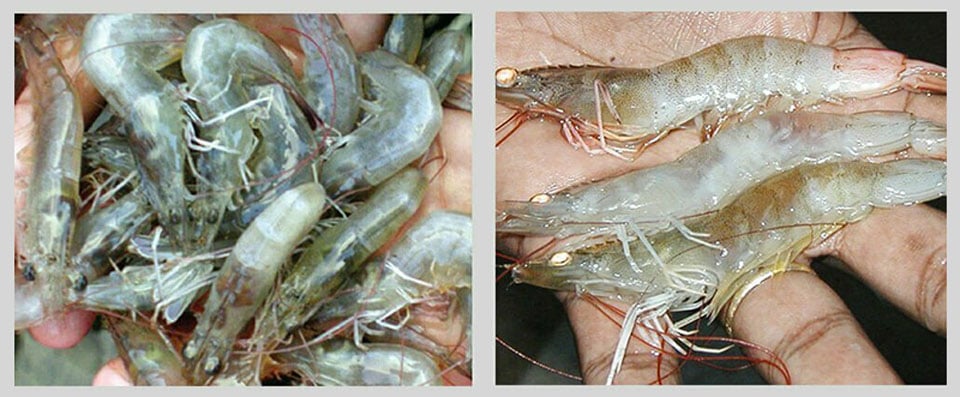
During the hot season, especially when ambient temperatures rise above 33–35°C, many shrimp farmers encounter situations where shrimp show signs of body bending, muscle whitening (muscle opacity), sluggish swimming, and reduced feed intake. These are dangerous warning signs. If not addressed promptly, they can lead to significant losses and, in severe cases, the complete failure of the crop.
Many shrimp farmers struggle to identify the exact cause of the problem, leading to incorrect treatments that weaken the shrimp further and result in increasing losses.
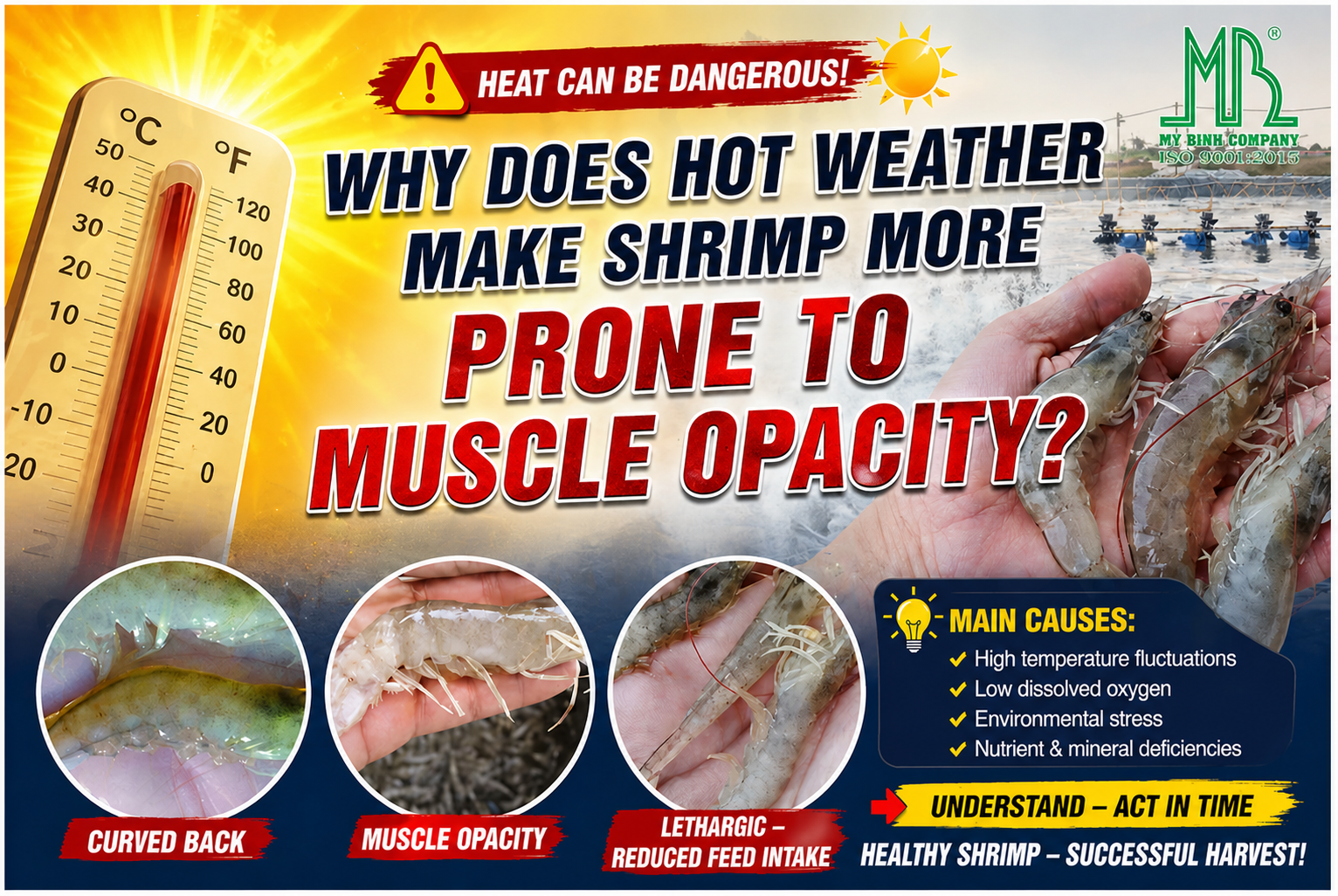
1. Why Does Shrimp Become More Prone to Curved Body and White Muscle During Hot, Sunny Weather?
This condition is not caused by a single factor. Instead, it results from the combined effects of several stressors in the pond when water temperature rises significantly.
1.1 Heat Stress Disrupts Muscle Function
When pond water temperature increases during the hottest hours of the day, especially from 11:00 AM to 3:00 PM, shrimp are exposed to severe heat stress. The greater the temperature difference between day and night, the more serious the impact.
Under these conditions, the shrimp’s metabolic processes become disrupted, causing abnormal muscle contraction. This leads to body curvature. If the stress persists, muscle tissues become damaged and turn opaque, resulting in white muscle syndrome.
1.2 Low Dissolved Oxygen at the Pond Bottom
Hot weather stimulates rapid algal growth in the pond. During the day, algae produce oxygen through photosynthesis, but at night they consume large amounts of oxygen.
At the same time, the pond bottom—where shrimp spend most of their time—often experiences localized oxygen depletion.
When oxygen is insufficient, shrimp must increase their respiratory activity and consume more energy than normal. This weakens the muscle tissue and makes it more susceptible to damage, leading to white muscle and body curvature.
1.3 Increased Toxic Gases (NH₃ and H₂S)
High temperatures also accelerate the decomposition of organic matter, producing toxic gases such as ammonia (NH₃) and hydrogen sulfide (H₂S).
These compounds directly damage the gills and nervous system, reducing the shrimp’s ability to absorb oxygen and nutrients.
As toxicity increases, shrimp become weakened and are more likely to develop curved body and white muscle syndrome.

Toxic gases and green algae appear in the shrimp pond
1.4 Nutritional and mineral deficiencies
During prolonged hot weather, shrimp often reduce their feed intake, leading to deficiencies in important nutrients such as vitamins, minerals, and especially selenium.
These nutrients play a vital role in maintaining muscle structure and enhancing the shrimp’s resistance to stress. When deficient, shrimp muscles become weak, more susceptible to necrosis, and the condition is clearly expressed through muscle whitening.
2. Consequences if not treated promptly
Curved body and muscle whitening are not only external symptoms but also warning signs that the shrimp’s health is seriously deteriorating.
If not properly managed in time, farmers may face several risks such as:
- Scattered shrimp mortality that is difficult to control
- Slower growth performance
- Significant reduction in survival rate
- Increased treatment costs with low effectiveness
In many cases, focusing only on water quality management while neglecting nutritional support will not provide sustainable results.
3. Effective Solutions for Curved Body and White Muscle Syndrome in Shrimp
To effectively address this condition, farmers should apply an integrated approach that combines water quality stabilization with internal nutritional support to help shrimp recover and regain normal physiological function.
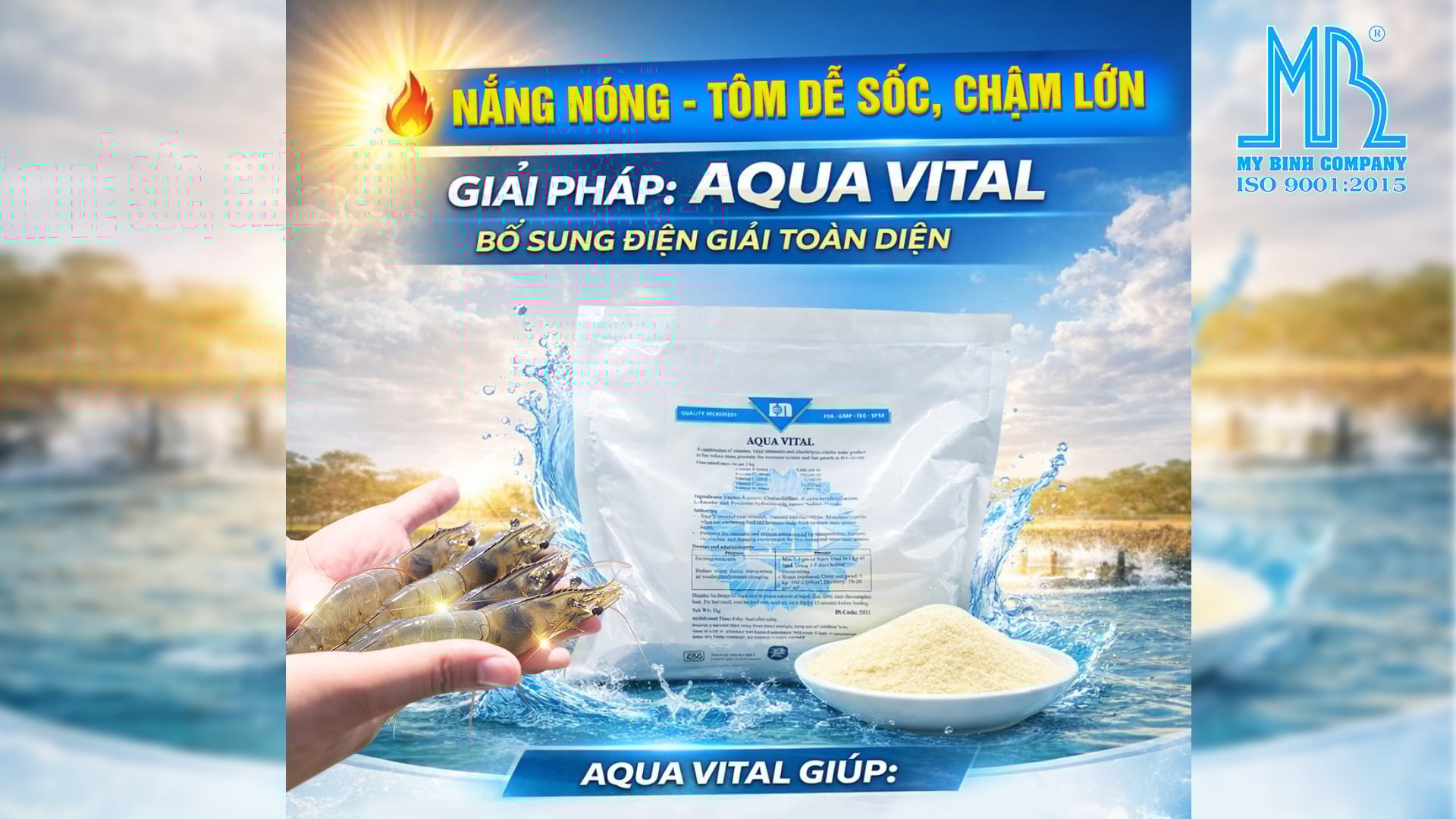
3.1 Supplement Vitamins, Trace Minerals, and Electrolytes
Providing additional vitamins, minerals, and electrolytes is essential to help shrimp cope with stress during periods of high temperature and environmental fluctuations.
Using AQUA VITAL helps supply a comprehensive range of vitamins and essential amino acids, which can:
- Strengthen the immune system
- Reduce stress caused by heat shock
- Support faster recovery of shrimp health and vitality
3.2 Integrating Pond Management and Toxic Gas Control
In addition to restoring shrimp health, effective pond environment management plays a critical role in preventing the recurrence of white muscle and bent body syndrome, especially during periods of intense heat.
Field experience shows that if water quality is not kept stable, factors such as toxic gases, algae fluctuations, and accumulated organic matter will continue to stress the shrimp, making recovery short-lived and unsustainable.
To address the root causes of the problem, farmers should proactively manage pond bottom conditions and maintain water quality on a regular basis.
Using ECO BLUE helps to:
- Decompose excess organic matter in the pond
- Rapidly reduce toxic gases such as NH₃ and H₂S
- Stabilize water color and limit harmful algae blooms
- Improve the overall pond environment and living conditions for shrimp
When the pond environment is well managed, shrimp will:
- Experience significantly less stress
- Improve nutrient digestion and absorption
- Reduce the recurrence of problems such as bent body and muscle whitening
4. Conclusion
Bent body and white muscle syndrome in shrimp during hot weather is not a random occurrence. It is the result of multiple interacting factors, including heat stress, low dissolved oxygen, toxic gases, and nutritional deficiencies.
Applying the right combination of nutritional support, trace minerals, and effective pond management solutions will help shrimp recover quickly, minimize losses, and maintain the profitability of the farming cycle.
Contact My Binh today for professional advice on preventing bent body and white muscle syndrome in shrimp during hot weather. Please refer to the contact information below. My Binh is honored to serve you.
..................................................
MY BINH EXPORT-IMPORT TRADING LIMITED COMPANY
Hotline: +84939881532 (WhatsApp, Line, Zalo, Messenger)
Head Office: 49/11B, Tran Hoang Na St., Tan An Ward, Can Tho City, Vietnam
Factory: 28T, Nguyen Van Quy St., Hung Phu Ward, Can Tho City, Vietnam