


Rainy Season Alert: Muscle Necrosis in Shrimp, White Muscle Syndrome in Shrimp & Soft Shell Shrimp After Molting. Discover the Solution with BLUESEA Organic Trace Minerals
- 1. Rainy Season – The Critical Stage That Determines the Success or Failure of a Shrimp Crop
- 2. Why Does the Rainy Season Increase the Risk of Mineral Deficiency in Shrimp?
- 3. Serious Consequences of Mineral Deficiency in Shrimp
- Muscle Necrosis in Shrimp
- 3. Slow Growth and High Mortality
- 4. Don't Just Treat the Pond Water—Restore Shrimp Health from Within
- 5. BLUESEA – Organic Vitamin & Trace Mineral Solution for Healthy Shrimp During the Rainy Season
- Key Benefits of BLUESEA
During the rainy season, shrimp are more susceptible to vitamin and mineral deficiency, leading to soft shell shrimp after molting and muscle necrosis in shrimp. These problems can reduce survival rates and overall production performance. Discover the causes and an effective solution with BLUESEA Organic Trace Minerals.
1. Rainy Season – The Critical Stage That Determines the Success or Failure of a Shrimp Crop
For shrimp farmers, the rainy season is always a high-risk period. Prolonged heavy rainfall not only causes significant fluctuations in key water quality parameters such as pH, alkalinity, and salinity, but also rapidly depletes dissolved minerals in the pond water. As a result, shrimp are highly susceptible to mineral deficiency, soft shell shrimp after molting, muscle necrosis in shrimp, reduced feed intake, and slow growth.
These problems commonly affect both Pacific white shrimp (Litopenaeus vannamei) and black tiger shrimp (Penaeus monodon), particularly during periods of rapid growth or immediately before molting. If not addressed promptly, these conditions can lead to substantial losses in survival rate and overall production performance.
2. Why Does the Rainy Season Increase the Risk of Mineral Deficiency in Shrimp?
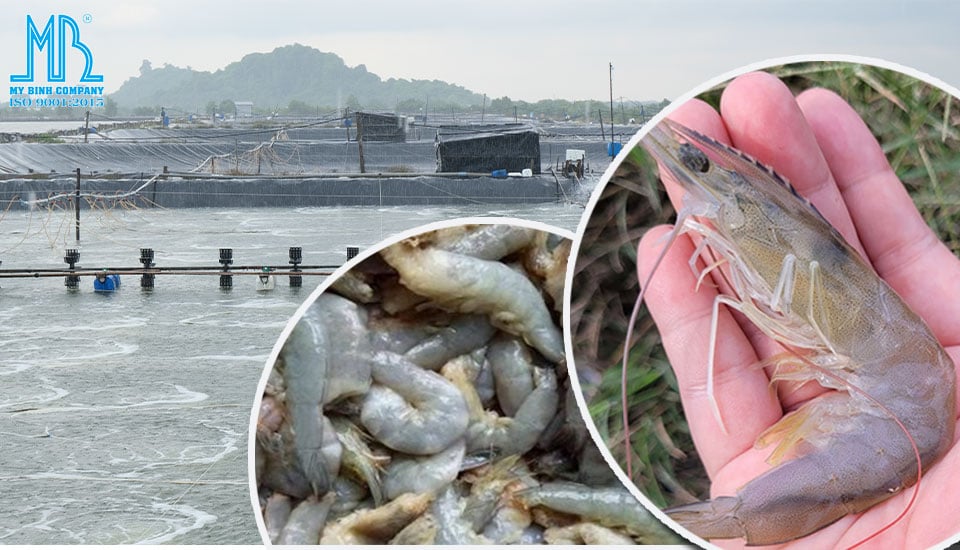
After every rainfall, pond water becomes diluted, reducing the concentration of essential minerals such as Calcium (Ca), Magnesium (Mg), Potassium (K), and other trace elements. At the same time, sudden fluctuations in pH and alkalinity significantly reduce the shrimp's ability to absorb these minerals.
However, minerals play a vital role in:
• Forming and hardening the exoskeleton after molting.
• Regulating osmotic pressure within the shrimp's body.
• Supporting enzyme activity and metabolic processes.
• Maintaining healthy muscles and connective tissues.
• Promoting rapid recovery after molting.
When mineral supplementation is insufficient, shrimp can quickly develop a range of abnormal signs and health problems.
3. Serious Consequences of Mineral Deficiency in Shrimp
At first, many shrimp farmers only notice reduced feed intake or weak swimming behavior. However, these are merely the early warning signs of a much more serious chain of problems.
Soft Shell Shrimp After Molting
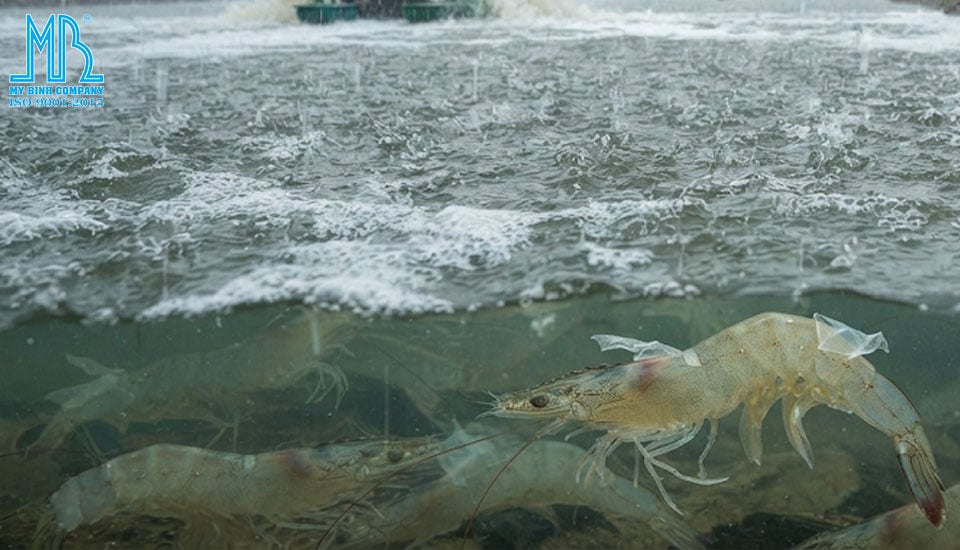
Molting is a natural growth process in shrimp. However, after molting, if the shrimp does not have sufficient minerals to rebuild its new exoskeleton, the shell remains soft for an extended period and fails to harden normally.
As a result:
- Shrimp become weak and less active.
- They are more vulnerable to cannibalism by other shrimp.
- Their feeding ability declines.
- The risk of bacterial infections and parasitic infestations increases.
Muscle Necrosis in Shrimp
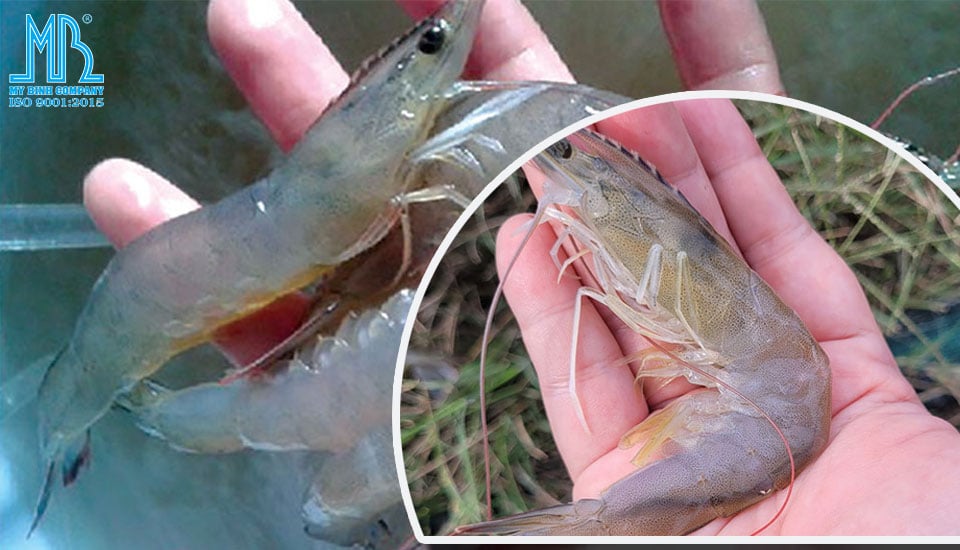
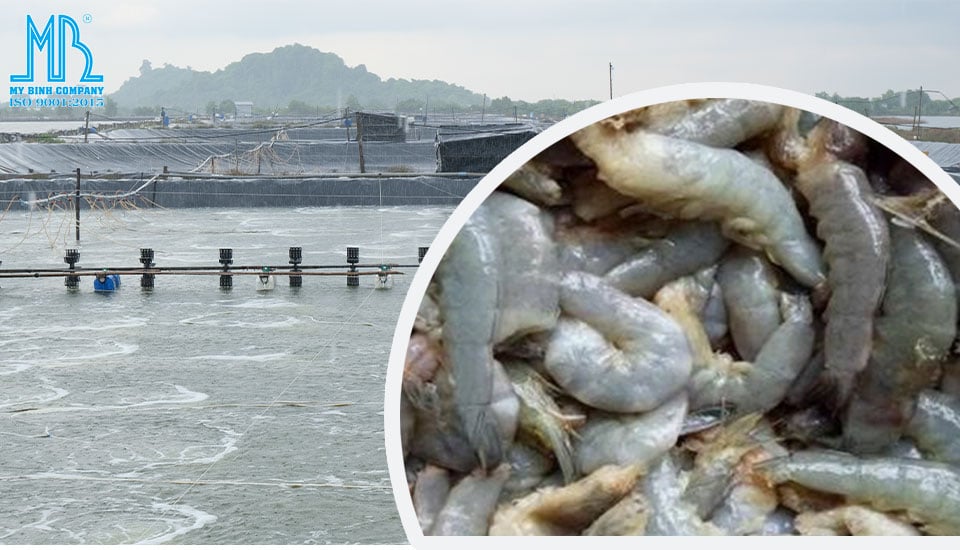
This is one of the most concerning problems shrimp farmers face during the rainy season. Muscle necrosis in shrimp refers to the condition in which shrimp die during the molting process. The shrimp have just shed their shells, leaving the new exoskeleton soft and not yet hardened. When collected, only the abdominal muscle remains because the head and other body parts have already been consumed by other shrimp or decomposed.
The condition is commonly associated with:
- Prolonged deficiency of essential minerals.
- Vitamin deficiency affecting normal metabolism.
- Environmental stress caused by sudden changes in water quality.
- Reduced overall health after repeated molting cycles.
Without timely intervention, muscle necrosis in shrimp can spread throughout the pond, resulting in slower growth, increased mortality, and significant economic losses for shrimp farmers.
3. Slow Growth and High Mortality
Vitamin and mineral deficiency in shrimp not only reduces nutrient absorption but also weakens the immune system, making shrimp more susceptible to opportunistic diseases during the rainy season. As a result, shrimp grow more slowly, culture periods become longer, feed conversion ratio (FCR) increases, and production costs rise significantly.
4. Don't Just Treat the Pond Water—Restore Shrimp Health from Within
Many shrimp farmers focus only on correcting water quality after heavy rainfall by adjusting pH, alkalinity, or applying water treatments. However, they often overlook the fact that the shrimp themselves also need nutritional recovery.
In reality, after every heavy rain, shrimp require a balanced supplementation of:
Vitamins to reduce stress.
Organic trace minerals for superior bioavailability.
Essential trace elements to promote shell formation and hardening.
Nutrients that support muscle recovery, strengthen immunity, and improve disease resistance.
Providing these nutrients at the right time helps shrimp recover more quickly, minimizing weather-related losses such as Muscle necrosis in shrimp, White muscle syndrome in shrimp, and Soft shell shrimp after molting.
5. BLUESEA – Organic Vitamin & Trace Mineral Solution for Healthy Shrimp During the Rainy Season
To help shrimp recover rapidly after heavy rains and minimize problems associated with Vitamin and mineral deficiency in shrimp, many shrimp farmers have chosen BLUESEA Organic Trace Minerals.
BLUESEA is scientifically formulated with a balanced combination of essential vitamins and highly bioavailable organic trace minerals to support shrimp health during periods of environmental stress and adverse weather conditions.
BLUESEA helps:
- Reduce the risk of Muscle necrosis in shrimp.
- Minimize White muscle syndrome in shrimp.
- Improve shell mineralization and reduce Soft shell shrimp after molting.
- Enhance nutrient absorption and growth performance.
- Strengthen the immune system and improve resistance to disease.
- Promote healthy molting and faster recovery after stressful conditions.
This comprehensive nutritional support enables shrimp to maintain healthy growth, achieve better survival rates, and improve overall farming profitability even during challenging rainy seasons.
Key Benefits of BLUESEA
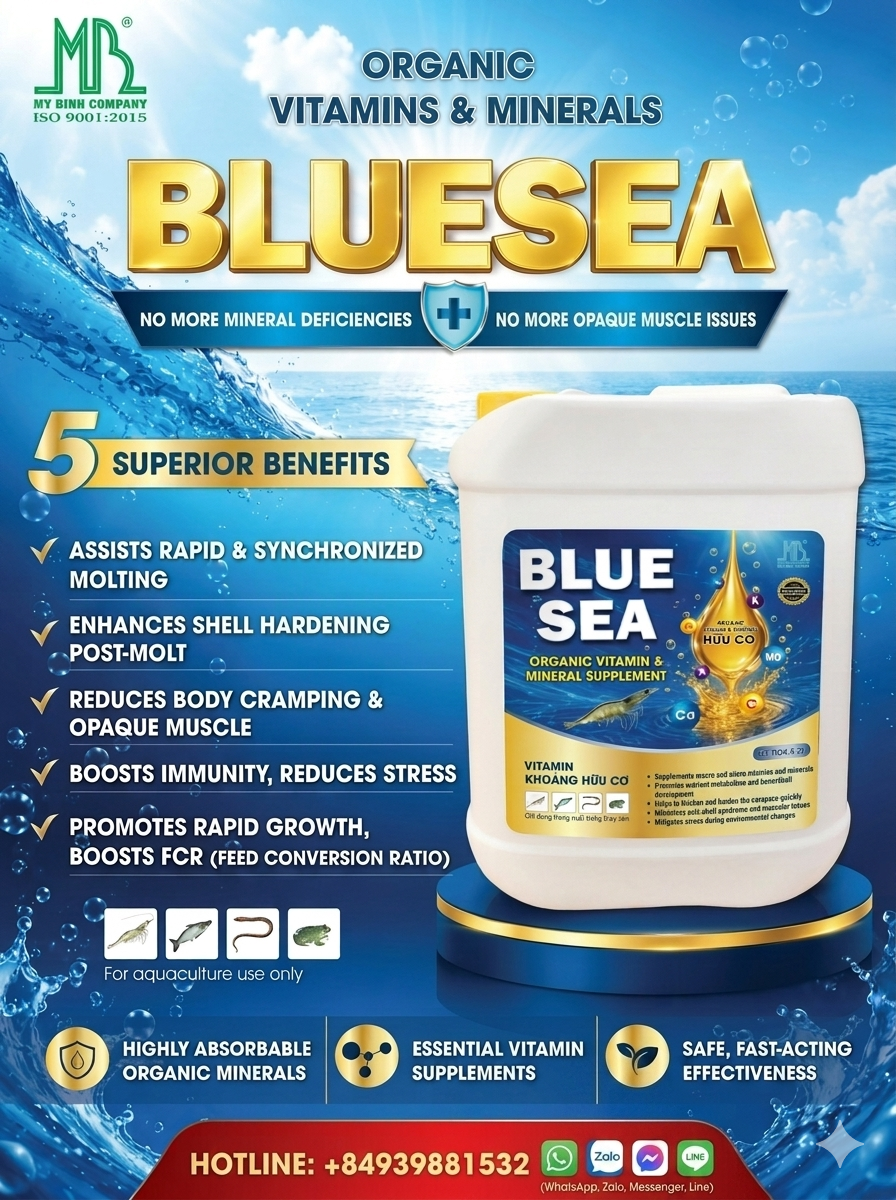
✔ Provides essential vitamins and organic trace minerals for shrimp.
✔ Supports a smooth and successful molting process.
✔ Helps shrimp develop a hard shell quickly after molting.
✔ Prevents vitamin and mineral deficiency in shrimp, especially during the rainy season.
✔ Reduces stress caused by sudden environmental changes.
✔ Promotes faster recovery and strengthens the shrimp's natural immune system.
✔ Improves feed intake, enhances vitality, and supports consistent growth.
Why Use BLUESEA During the Rainy Season?
When applied regularly throughout the rainy season or immediately after heavy rainfall, BLUESEA Organic Trace Minerals help shrimp rapidly restore their nutritional balance and significantly reduce the risk of soft shell shrimp after molting, delayed shell hardening, muscle necrosis in shrimp, and White Muscle Syndrome in Shrimp.
Proactive Mineral Supplementation – Protect Productivity Throughout the Culture Cycle
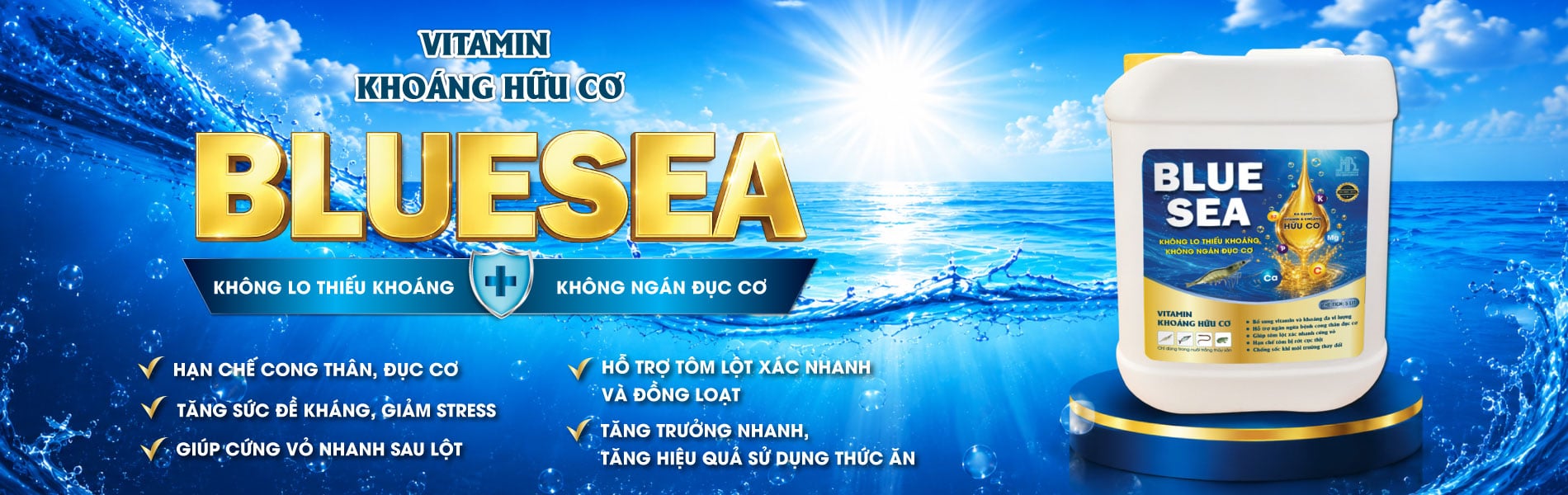
In modern shrimp farming, prevention is always more effective and cost-efficient than treatment. Proactively supplementing shrimp with vitamins and organic trace minerals before, during, and after rainfall helps maintain optimal health, reduce stress, and improve their ability to adapt to sudden environmental changes.
Don't wait until shrimp develop soft shells after molting, muscle necrosis, or reduced feed intake before taking action. Providing the right nutritional support at the right time helps improve survival rates, shorten the culture period, and maximize farm profitability.
BLUESEA Organic Trace Minerals is your trusted partner in helping shrimp safely overcome the rainy season, remain healthy and resilient, and achieve sustainable growth.
......................................
MY BINH EXPORT-IMPORT TRADING LIMITED COMPANY
📲 Hotline: +84939881532 (WhatsApp, Line, Messenger, Zalo)
🌐 Website: https://mybinh.com.vn
🏢 Head Office: 49/11B Tran Hoang Na Street, Tan An Ward, Can Tho City, Vietnam.
🏭 Manufacturing Factory: 28T Nguyen Van Quy Street, Hung Phu Ward, Can Tho City, Vietnam.