


Boosting shrimp immunity during the rainy season? Secrets to Healthy Shrimp & Effective Stress Reduction
- Why Does the Rainy Season Weaken Shrimp Immunity?
- Heavy Rainfall Causes Severe Environmental Fluctuations in Aquaculture Ponds
- Drop in Dissolved Oxygen Triggers Severe Stress in Shrimp
- Molting shrimp require greater protection
- How to Boost Shrimp Immunity During the Rainy Season?
- 1. Proactively Maintain Stable Pond Environmental Conditions
- 2. Maintain Stable Dissolved Oxygen (DO) Levels
- 3. Supplement Vitamins and Minerals to Support Shrimp Health
- BLUESEA – The Organic Mineral & Vitamin Solution for Shrimp in the Rainy Season
The rainy season is a critical period during which shrimp farmers must pay special attention to the health of their stock. Heavy and prolonged rainfall not only induces water temperature fluctuations but can also cause rapid changes in pH, salinity, alkalinity, and dissolved oxygen (DO) levels.
When environmental conditions change abruptly, shrimp are prone to stress, loss of appetite, slow growth, and weakened immunity.
So, how can we boost shrimp immunity during the rainy season to help them overcome adverse weather conditions and maintain steady growth? The answer lies not only in water treatment, but also in combining environmental stabilization with proper nutritional supplementation for the shrimp.
Why Does the Rainy Season Weaken Shrimp Immunity?
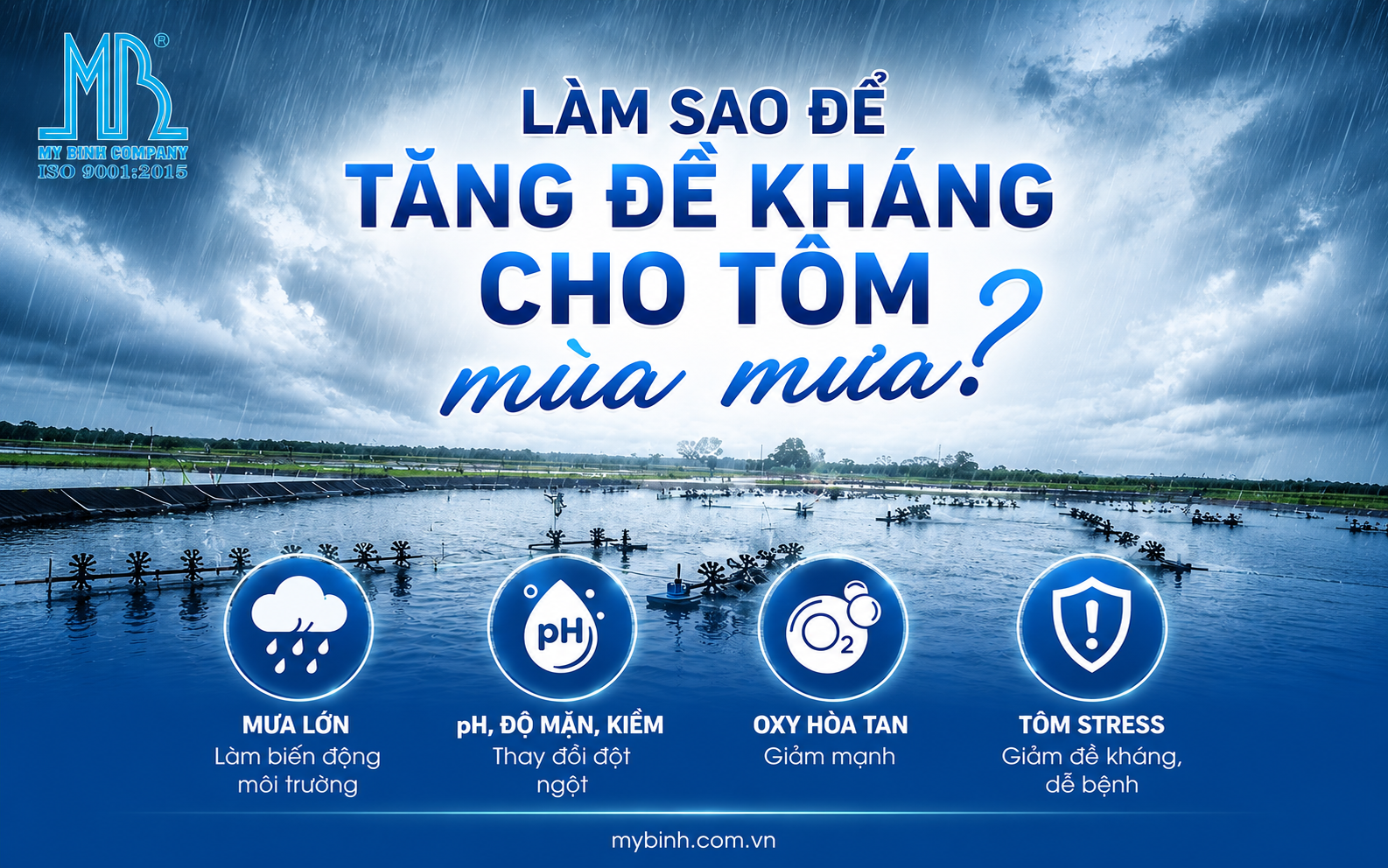
Heavy Rainfall Causes Severe Environmental Fluctuations in Aquaculture Ponds
Rainwater dilutes pond water, triggering sudden changes in critical water parameters such as salinity, pH, alkalinity, and temperature. Following heavy rain, if farmers fail to monitor and adjust these levels promptly, shrimp are highly susceptible to environmental shock.
Notably, research on Litopenaeus vannamei (whiteleg shrimp) ponds in Vietnam indicates that water quality parameters experience significantly greater fluctuations during the rainy season, with dissolved oxygen (DO) and nitrite being particularly critical factors.
Drop in Dissolved Oxygen Triggers Severe Stress in Shrimp
Prolonged rainy weather reduces sunlight intensity, negatively affecting algal photosynthesis. As microalgae density shifts or crashes—leading to organic decomposition—dissolved oxygen levels in the pond continue to deplete rapidly.
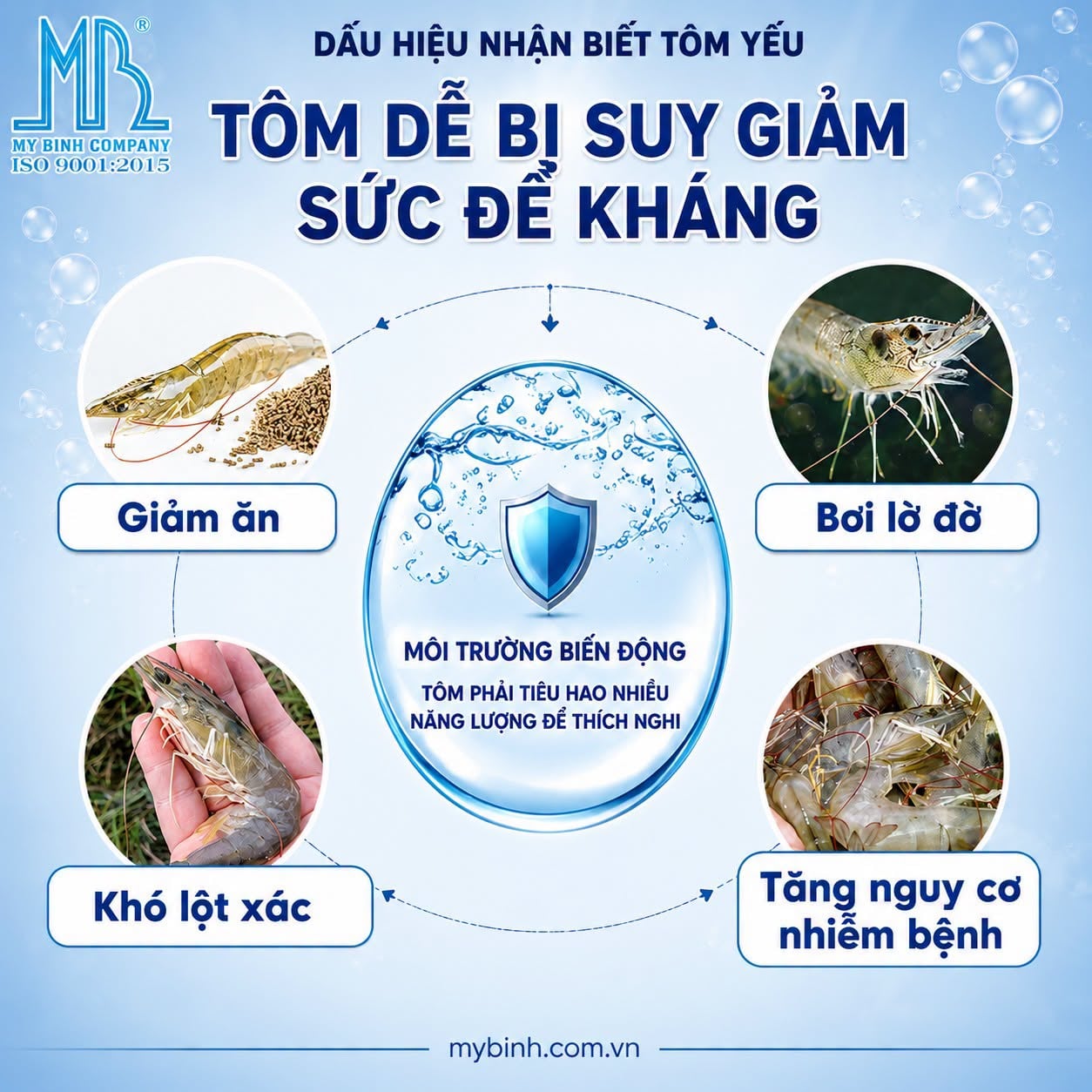
Extended periods of low dissolved oxygen (hypoxia) not only impede shrimp activity and growth performance, but also compromise their immune response and overall resilience.
Consequently, after heavy rains, farmers frequently observe clinical signs such as feed intake reduction, lethargic swimming, size variation, and stunted growth in shrimp stocks.
Molting shrimp require greater protection
Molting is an exceptionally sensitive phase in the shrimp life cycle. After shedding the exoskeleton, the soft-shelled shrimp requires time for shell hardening and consumes substantial nutritional and mineral reserves for recovery.
If environmental parameters in the pond fluctuate sharply during this critical stage, shrimp experience heightened physiological stress, which compromises the recovery process and significantly increases susceptibility to health issues.
Therefore, boosting shrimp immunity during the rainy season should not merely be a reactive measure when shrimp are already weakened. Instead, it demands proactive preparation and continuous maintenance throughout periods of weather instability.
How to Boost Shrimp Immunity During the Rainy Season?
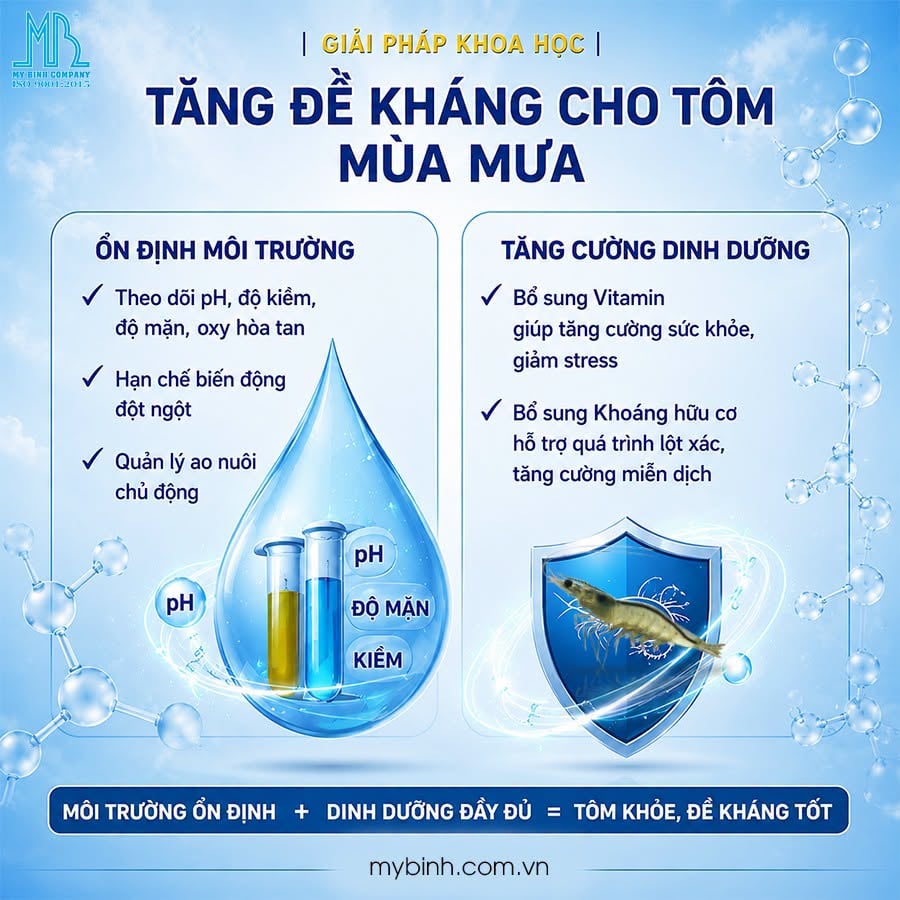
1. Proactively Maintain Stable Pond Environmental Conditions
After heavy rainfall, the immediate priority is to test key water quality parameters including pH, alkalinity, salinity, and dissolved oxygen (DO).Decisions should never be based solely on visual inspection of water color or shrimp behavior.
Unseen environmental fluctuations are often the primary drivers of severe stress in shrimp.
Crucially, sudden shifts in water quality parameters must be minimized. Proactive pond management reduces adaptation pressure on shrimp, helping them maintain normal activity and feed consumption.
2. Maintain Stable Dissolved Oxygen (DO) Levels
During and after prolonged rainstorms, aeration systems and paddlewheels must be operated effectively according to stocking density and real-time pond conditions. Dissolved oxygen is the cornerstone of shrimp health; low DO levels can lead to reduced feed intake, retarded growth, and heightened stress susceptibility. Particular attention should be paid to nighttime and early morning hours when oxygen demand is at its peak and pond DO experiences the greatest pressure.
3. Supplement Vitamins and Minerals to Support Shrimp Health
While environmental stability is a prerequisite, adequate nutrition provides the physical foundation for shrimp to adapt to environmental stress.During the rainy season, farmers should proactively supplement suitable vitamins and minerals to:
- Enhance overall health and stress tolerance.
- Support successful molting and shell hardening.
- Replenish essential mineral nutrients.
- Aid recovery following environmental fluctuations.
- Maintain feed intake and steady growth rates.
In particular, essential minerals such as Calcium (Ca), Magnesium (Mg), and Potassium (K), along with vital vitamins, play a crucial role in shrimp growth, physiological development, and environmental adaptation.
BLUESEA – The Organic Mineral & Vitamin Solution for Shrimp in the Rainy Season
If farmers are looking for an effective solution to boost shrimp immunity during the rainy season, BLUESEA is an ideal addition to your shrimp care routine during periods of fluctuating weather.
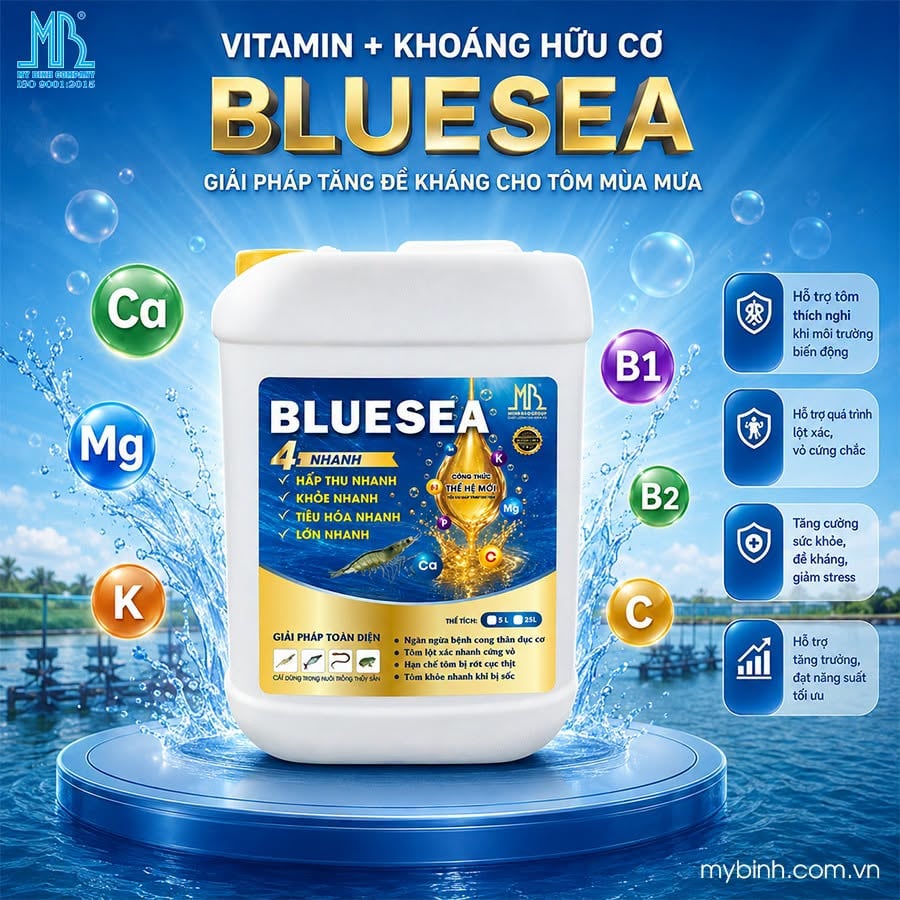
BLUESEA – Organic Minerals & Vitamins is specially formulated to provide a dual-action supplement of essential vitamins and minerals, featuring key components such as Calcium (Ca), Magnesium (Mg), Potassium (K), Vitamin B1, Vitamin B2, and Vitamin C.
The product addresses four critical needs of shrimp stock during the rainy season:
Maintaining health stability
Mitigating environmental stress
Supporting molting and shell hardening
Promoting optimal growth
Crucially, farmers should not wait for shrimp to show signs of weakness before taking action. As the rainy season approaches, proactively establishing a combined strategy of water quality management and targeted nutritional supplementation will help shrimp adapt more effectively to environmental changes.
FEEDBACK OF CUSTOMER AFTER USING BLUESEA
The rainy season is manageable when farmers take a proactive approach. Stable water quality + Adequate dissolved oxygen + Balanced nutrition = A solid foundation for healthy shrimp and enhanced resilience.
Instead of reacting only when shrimp show reduced feed intake, weakness, or abnormal signs, take control by fortifying your crop from the early days of the rainy season.
BLUESEA – Vitamin + Organic Minerals is an ideal nutritional solution that helps farmers stay ahead in their seasonal care strategy. Don't wait until your shrimp weaken to build immunity—proactively protect your stock before every heavy rain.
.......................................................................
MY BINH EXPORT-IMPORT TRADING LIMITED COMPANY
📲 Hotline: +84939881532 (WhatsApp, Line, Messenger, Zalo)
🌐 Website: https://mybinh.com.vn
🏢 Head Office: 49/11B Tran Hoang Na Street, Tan An Ward, Can Tho City, Vietnam.
🏭 Manufacturing Factory: 28T Nguyen Van Quy Street, Hung Phu Ward, Can Tho City, Vietnam.