


Mineral Supplementation in Shrimp Ponds: Why Do Shrimp Grow Slowly and Have Soft Shells Despite Eating Normally?
Slow-growing shrimp are a common issue that many shrimp farmers encounter during the production cycle. Feed is supplied to the pond regularly, and the shrimp show good feeding activity. Their gut condition may also appear normal. However, upon closer examination, farmers may find slow shrimp growth, poor weight gain, uneven shrimp sizes, and asynchronous molting.
This can lead to steadily increasing feed costs, while overall farming performance still falls short of expectations.
So, why do shrimp eat well but grow slowly? The problem may not be the amount of feed provided, but rather the shrimp’s ability to digest, absorb, metabolize, and utilize nutrients efficiently.
1. Shrimp Eat Well but Grow Slowly – Why Does This Happen?
Eating More Does Not Necessarily Mean Better Growth
In shrimp farming, farmers often monitor feed intake and feeding activity to assess the condition of the shrimp. However, for shrimp to achieve good growth, the nutrients provided through feed must first be properly digested, absorbed, and metabolized into energy and building materials needed for growth and molting.
If the nutritional profile of the diet does not fully meet the shrimp's requirements, particularly in terms of vitamins and organic minerals, shrimp may continue to feed actively while their ability to utilize nutrients remains suboptimal.
This is one of the reasons why some shrimp populations eat well but grow slowly, with slow size progression and increasingly uneven sizes within the population.
Vitamins and Minerals Play an Important Role in Shrimp
Vitamins are involved in numerous metabolic processes in shrimp, while minerals are closely associated with shell formation and hardening, physiological balance, and the shrimp's ability to adapt to environmental changes.
When the supply of vitamins and minerals from feed and the pond environment is insufficient, shrimp may show the following signs:
- Slow growth despite good feeding activity.
- Uneven size distribution within the shrimp population.
- Increased susceptibility to stress when environmental conditions change.
- Asynchronous or uneven molting.
- Delayed shell hardening, which may affect overall health and growth performance.
- Higher feed costs due to inefficient nutrient utilization and conversion.
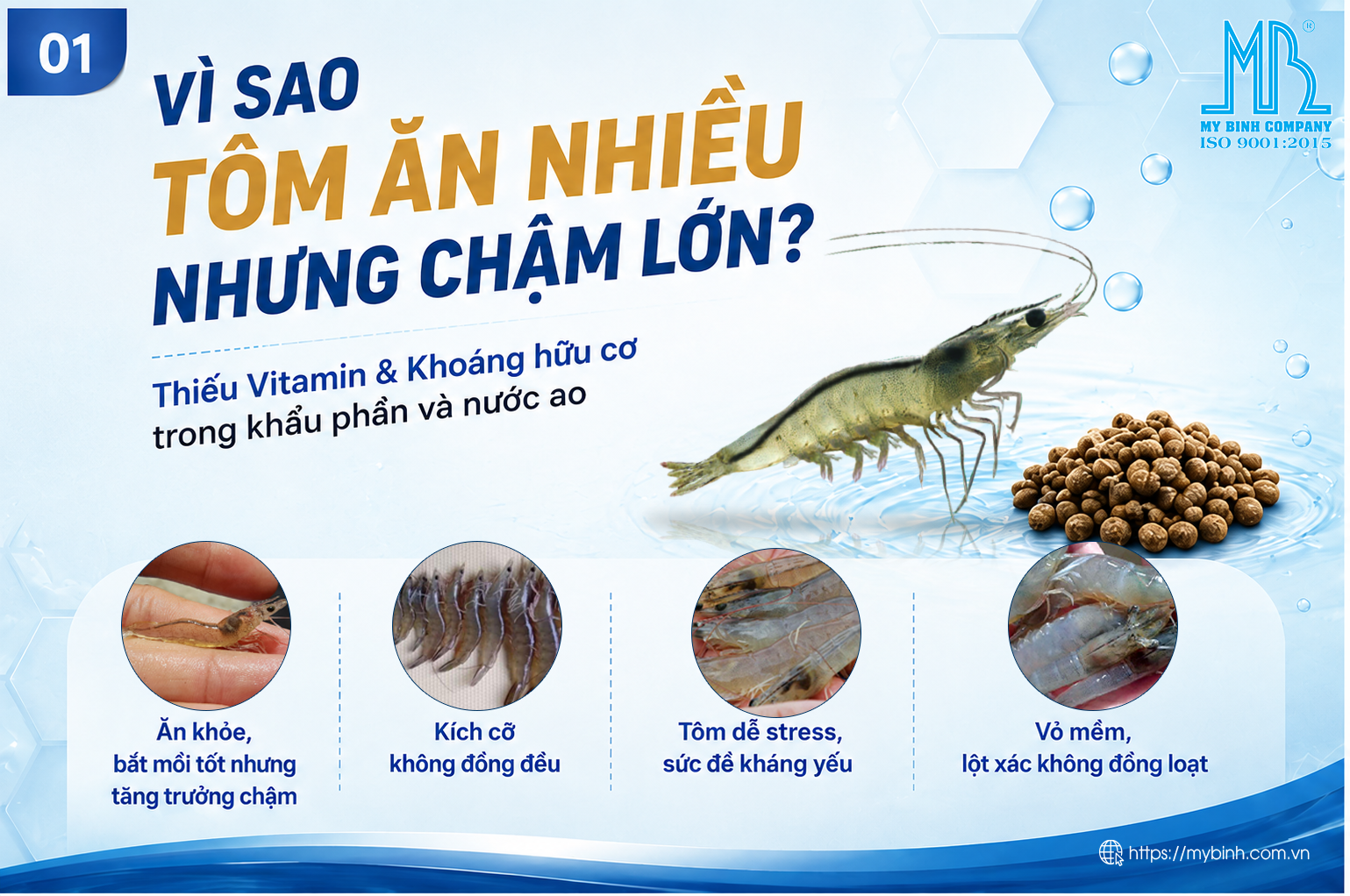
Why Do Shrimp Eat a Lot but Grow Slowly?
Therefore, when shrimp eat a lot but grow slowly, farmers should not simply increase the amount of feed. Instead, they should take a comprehensive look at the nutritional quality of the diet and the shrimp’s ability to digest and absorb nutrients.
2. What Are the Potential Consequences of Vitamin & Organic Mineral Deficiency?
Poor nutrient utilization: A diet may be adequate in quantity but still lack a proper balance of micronutrients, resulting in suboptimal nutrient utilization. Shrimp may consume sufficient feed but fail to effectively utilize the available nutrients for growth. As a result, more feed may be consumed while size gain does not increase proportionally.
Reduced health and adaptability: During the culture cycle, shrimp constantly need to adapt to fluctuations in water quality, temperature, salinity, pH, and other environmental factors. When the nutritional foundation is inadequate, shrimp may become more susceptible to stress when pond conditions change. A healthy shrimp population with adequate nutritional support is better positioned to maintain consistent growth.
Asynchronous molting and delayed shell hardening: Molting is a critical stage in shrimp growth. During this period, shrimp require adequate nutrition and minerals to support the molting process and subsequent shell formation. If the mineral supply is inadequate or poorly balanced, shrimp may experience soft shells, delayed shell hardening, or asynchronous molting, which can contribute to increasing size variation within the population.
Slow growth and higher FCR: When feed is not utilized efficiently, farmers may need to maintain feeding levels for a longer period to achieve the same amount of weight gain. As a result, feed costs increase, FCR (Feed Conversion Ratio) may become higher, and the overall economic efficiency of the production cycle may decline.
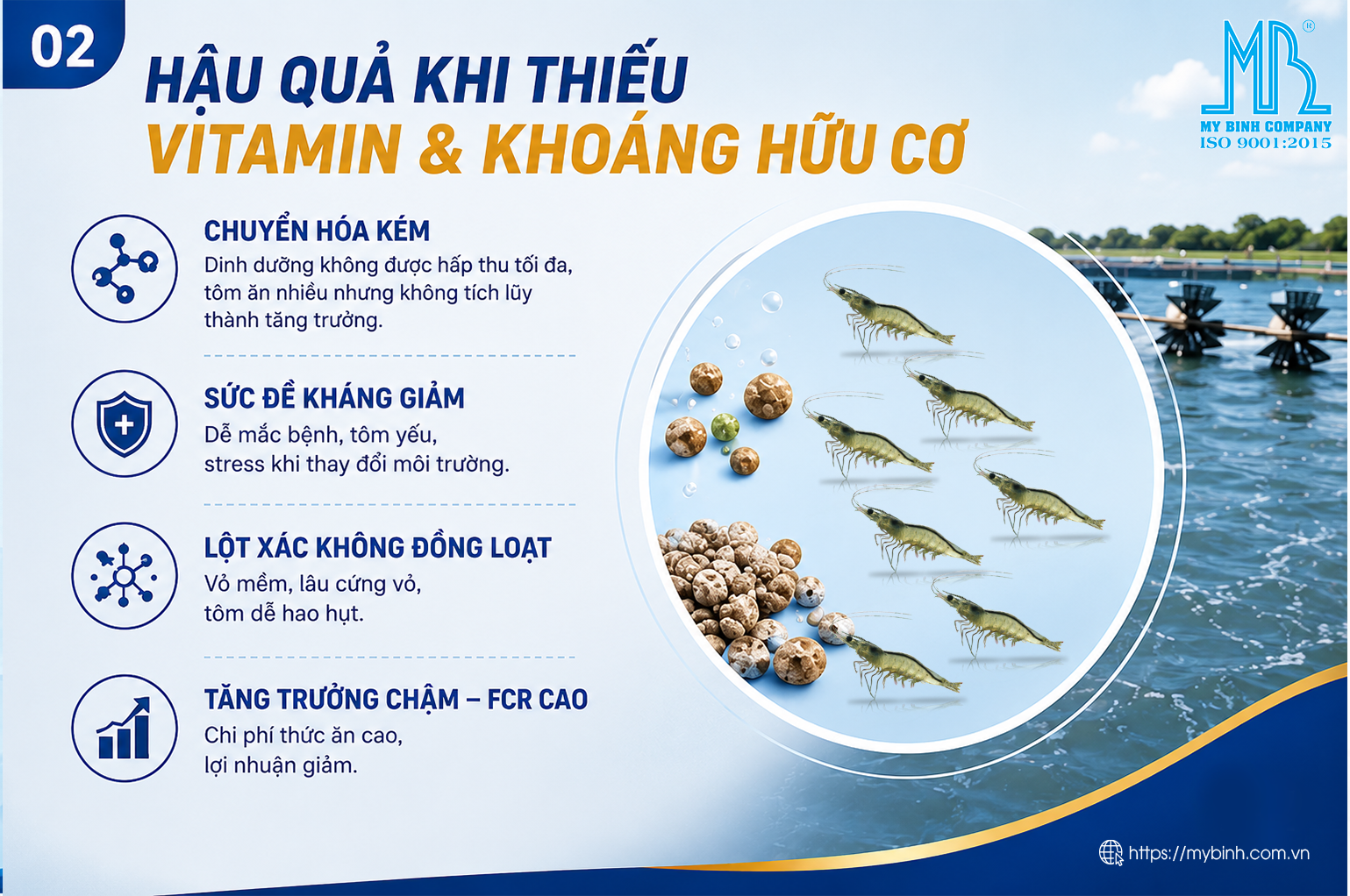
Consequences when shrimp lack organic vitamins and minerals
3. Solution: Supplementation with Appropriate Vitamins & Organic Minerals
If you are experiencing shrimp eat well but grow slowly, in addition to managing feed, water quality, and overall shrimp health, farmers may consider supplementing the diet with an appropriate source of vitamins and organic minerals.
The goal is not to make shrimp consume more feed, but to support more efficient nutrient utilization, helping shrimp make better use of the nutrients already provided through the diet.
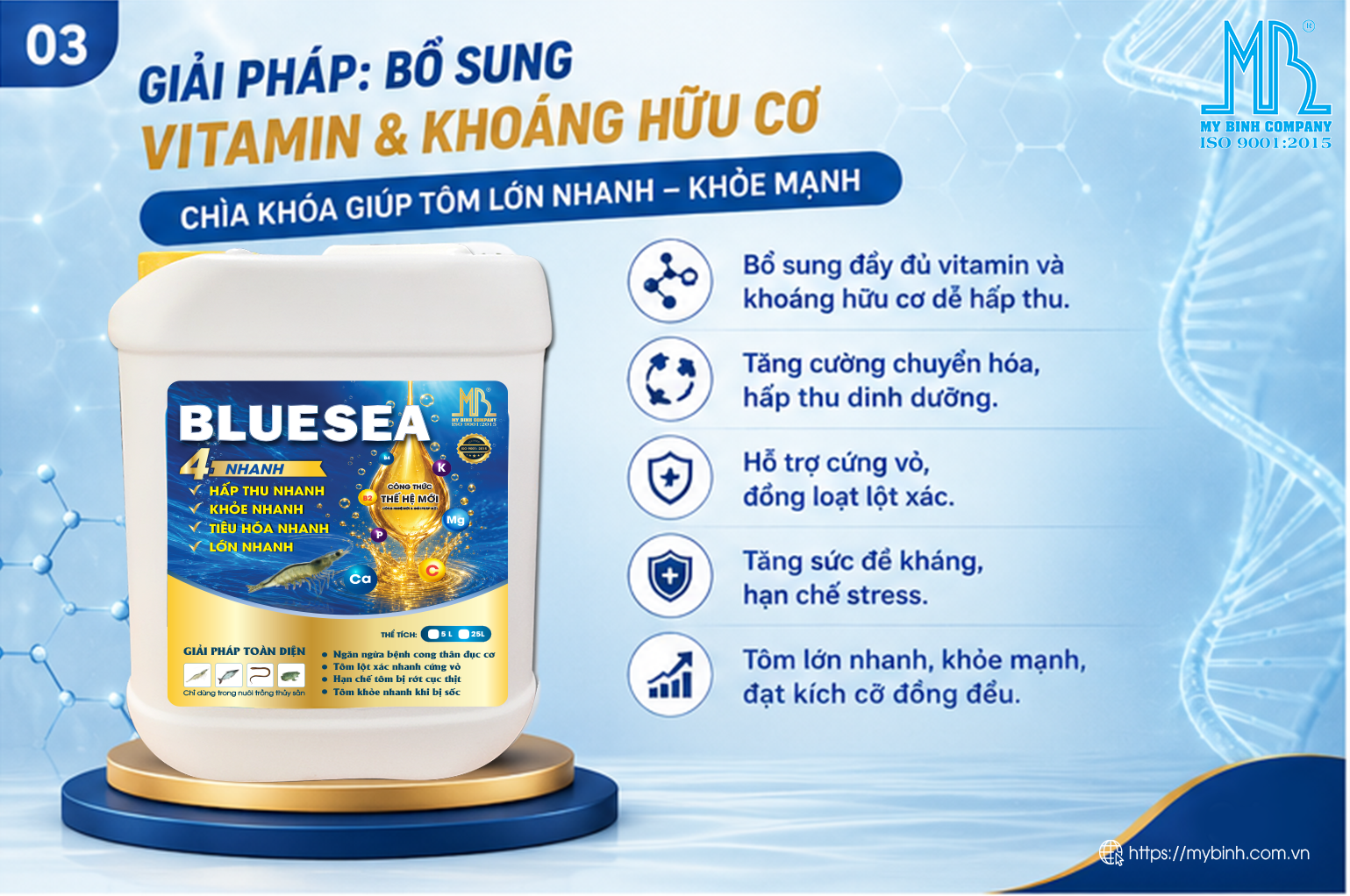
Solution for Vitamin and Organic Mineral Supplementation in Shrimp – BLUESEA
BLUESEA – Vitamin & Organic Mineral Supplement for Shrimp
BLUESEA is developed as a vitamin and organic mineral supplement for shrimp, helping to support and complement the nutritional requirements throughout the shrimp farming cycle.
The product is designed to provide the following benefits:
- Supplement vitamins and organic minerals suitable for shrimp.
- Support nutrient digestion, absorption, and utilization.
- Support molting and shell hardening.
- Support shrimp health and adaptability to environmental changes.
- Contribute to healthy shrimp growth and more uniform size distribution.
With an adequate nutritional foundation, farmers can take a more proactive approach to supporting shrimp during periods of high nutritional demand, particularly growth and molting stages.
4. Want Shrimp to Grow Faster? Don’t Focus Only on Feed Intake
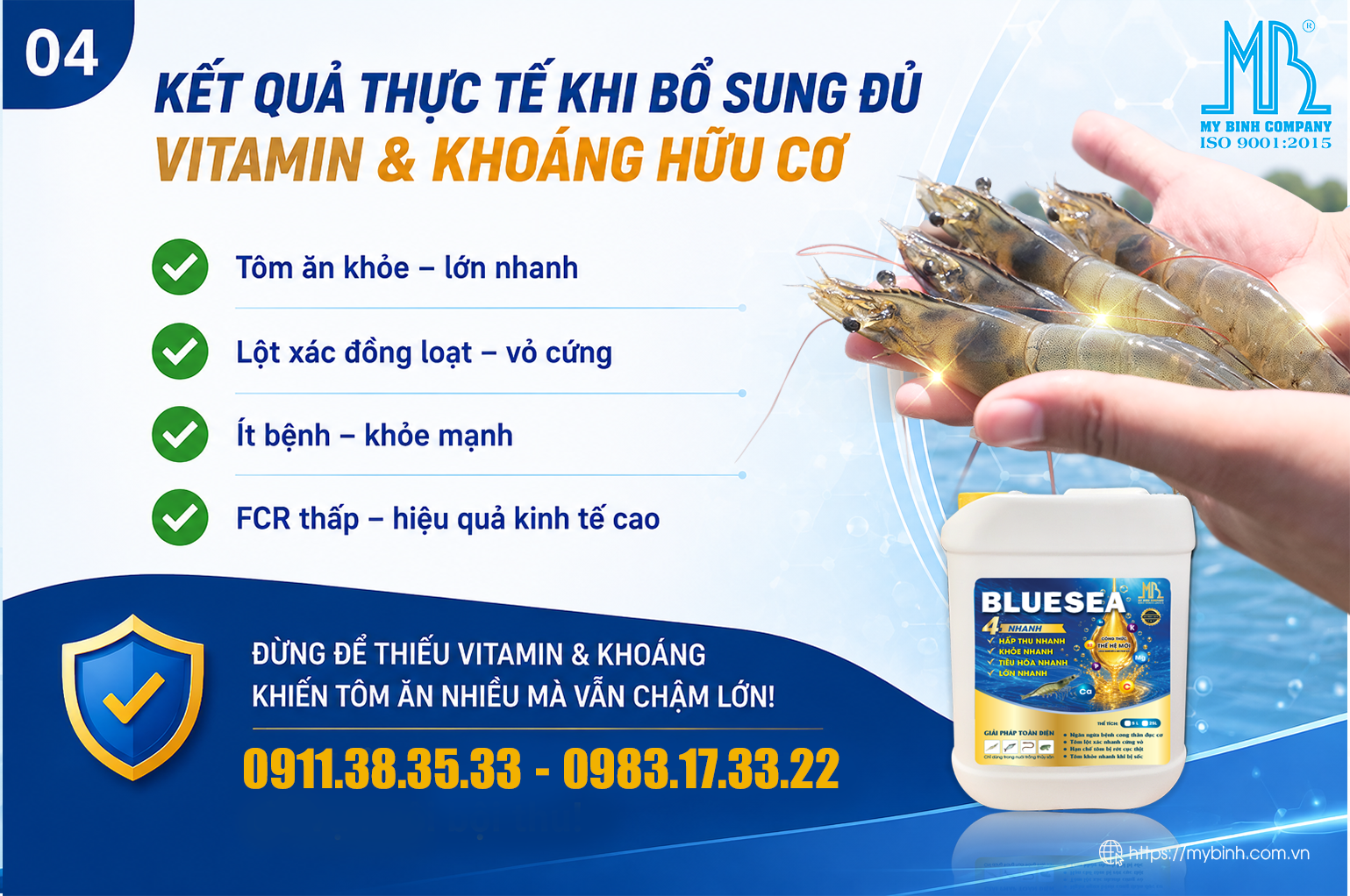
The Role of BLUESEA Vitamins and Organic Minerals in Shrimp
Shrimp eating a lot but growing slowly does not always mean that they need more feed.
What matters is to look at the entire process: how well shrimp feed – how efficiently they digest and absorb nutrients – how effectively nutrients are metabolized – whether molting occurs properly – and whether growth is uniform across the population.
If shrimp continue to show good feeding activity but experience slow growth, soft shells, asynchronous molting, or uneven size distribution, farmers should review the vitamin and mineral supply in the diet as well as the pond environment.
Proper supplementation with vitamins and organic minerals can be an important part of a comprehensive strategy to support shrimp health, growth performance, and feed utilization efficiency.
Do not let the problem of “shrimp eating a lot but still growing slowly” persist, resulting in continuously increasing feed costs while shrimp size remains below expectations.
..............................................
MY BINH EXPORT-IMPORT TRADING LIMITED COMPANY
📲 Hotline: +84939881532 (WhatsApp, Line, Messenger, Zalo)
🌐 Website: https://mybinh.com.vn
🏢 Head Office: 49/11B Tran Hoang Na Street, Tan An Ward, Can Tho City, Vietnam.
🏭 Manufacturing Factory: 28T Nguyen Van Quy Street, Hung Phu Ward, Can Tho City, Vietnam.