


5 Signs to identify EHP in shrimp early that You can detect with the naked eye – Don’t let it be too late!
- 1. Shrimp show slow growth and severe size variation (uneven grading)
- 2. Dark or dull body coloration
- 3. Chronic soft shell and mild muscle opacity in shrimp
- 4. Pale or atrophied hepatopancreas
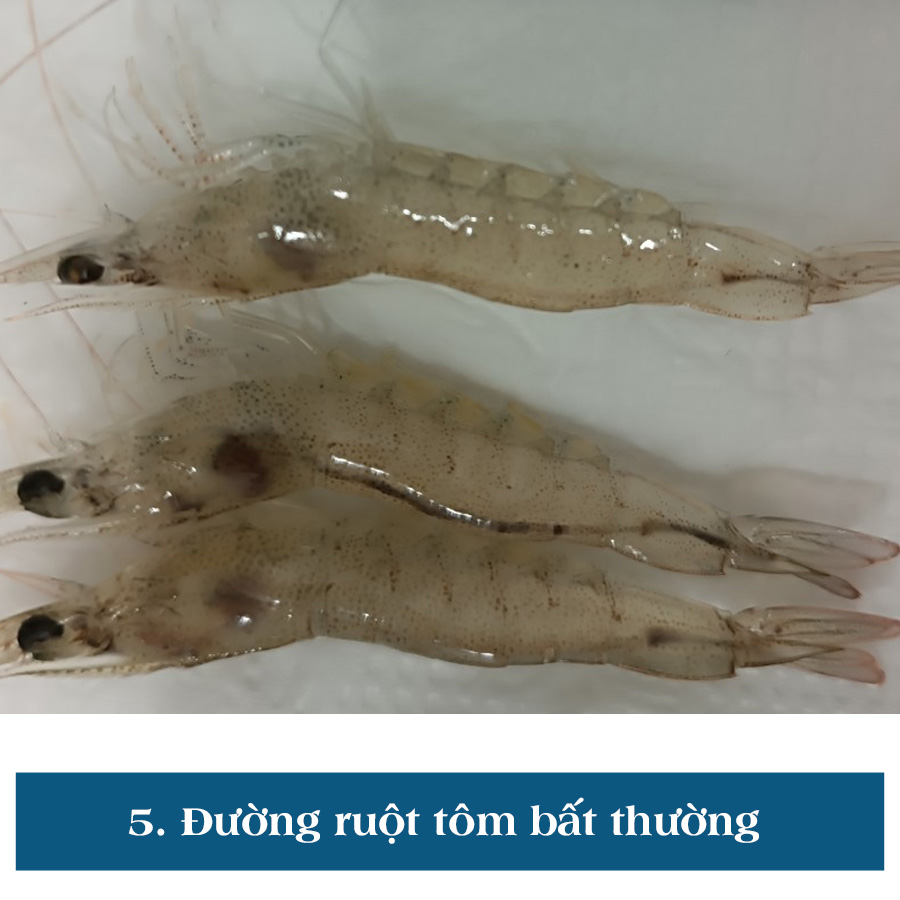
- 5. Abnormal shrimp intestine (broken, empty gut)
- 6. EHP ROY – The solution to overcome EHP, keeping shrimp healthy and promoting fast growth.
EHP microsporidia is the most dangerous “hidden enemy” in shrimp farming ponds today. Unlike diseases that cause rapid mortality, EHP damages profitability by slowing shrimp growth. Early detection through daily observation is crucial for farmers to decide whether to continue culturing or harvest early.

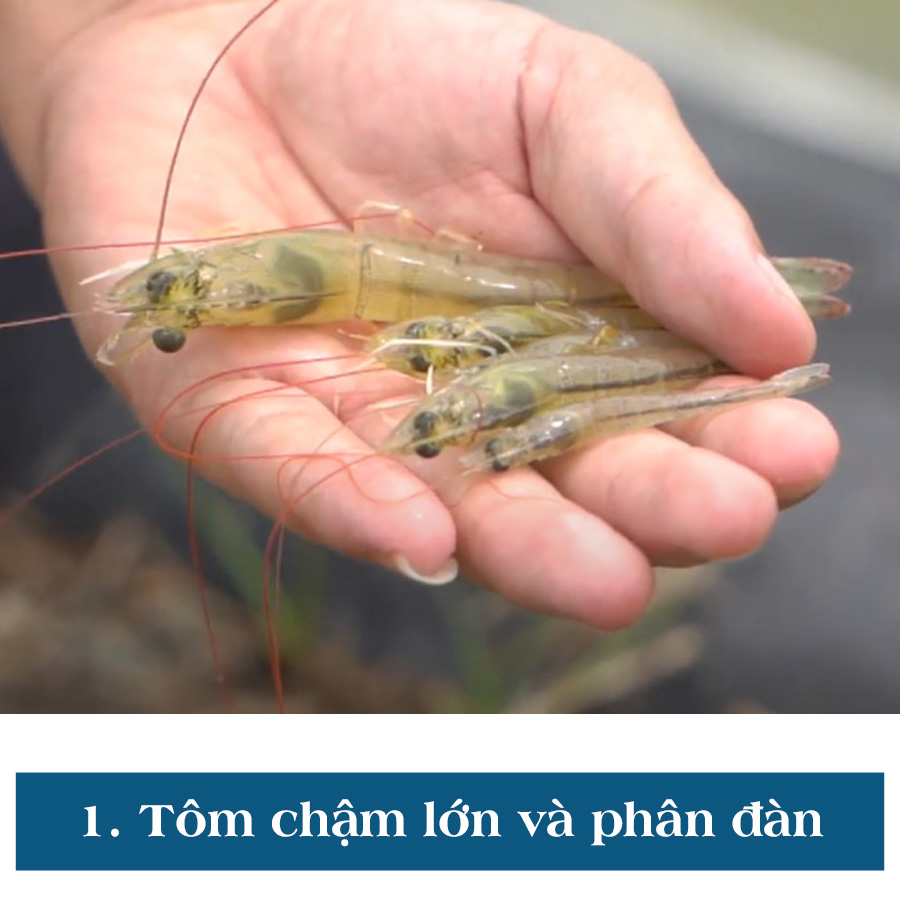
1. Shrimp show slow growth and severe size variation (uneven grading)
This is one of the most typical signs of EHP infection. When microsporidia invade the hepatopancreas cells, shrimp lose their ability to absorb nutrients efficiently.
Symptoms: In the same pond and at the same age, shrimp sizes are highly inconsistent. Some reach the expected size, while others are only 1/2 or even 1/3 of the average size.
Observation period: This condition is usually most noticeable from around day 25 of culture onwards.
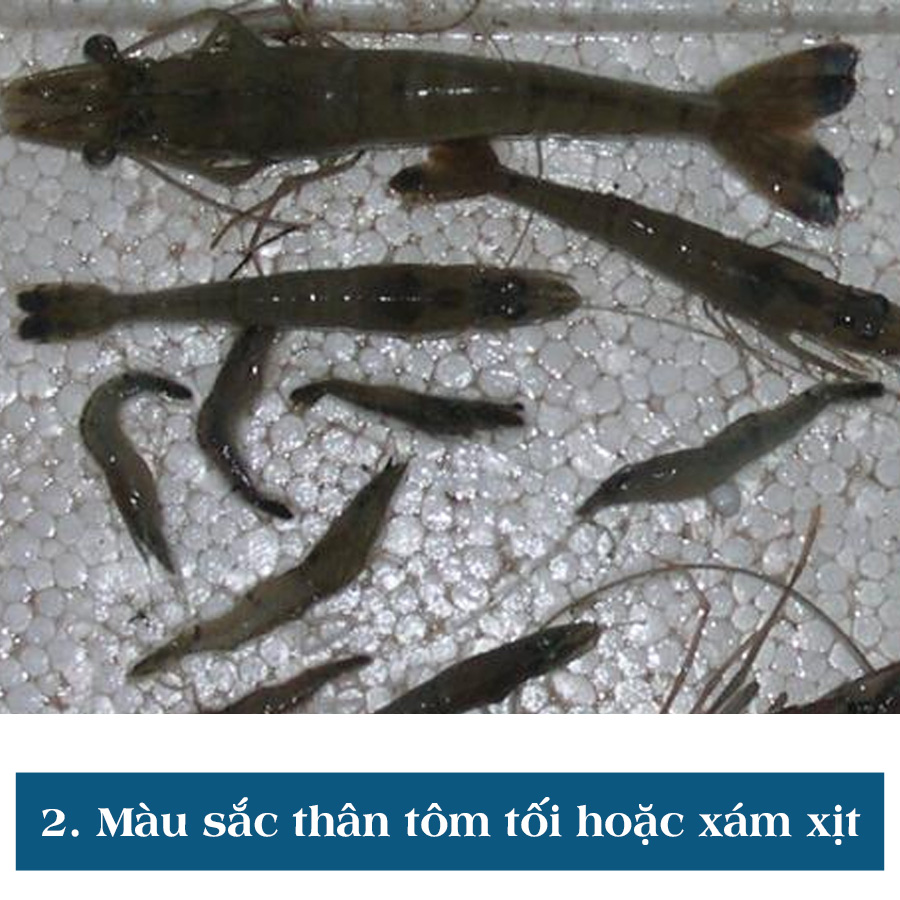
2. Dark or dull body coloration
Healthy shrimp typically have a bright, glossy appearance. Shrimp infected with EHP (microsporidian) often look dull and less vibrant.
Signs: The shrimp’s body appears slightly darker or grayish, skin pigmentation is uneven, and the shrimp looks lethargic and lacks the characteristic shine of healthy whiteleg shrimp.
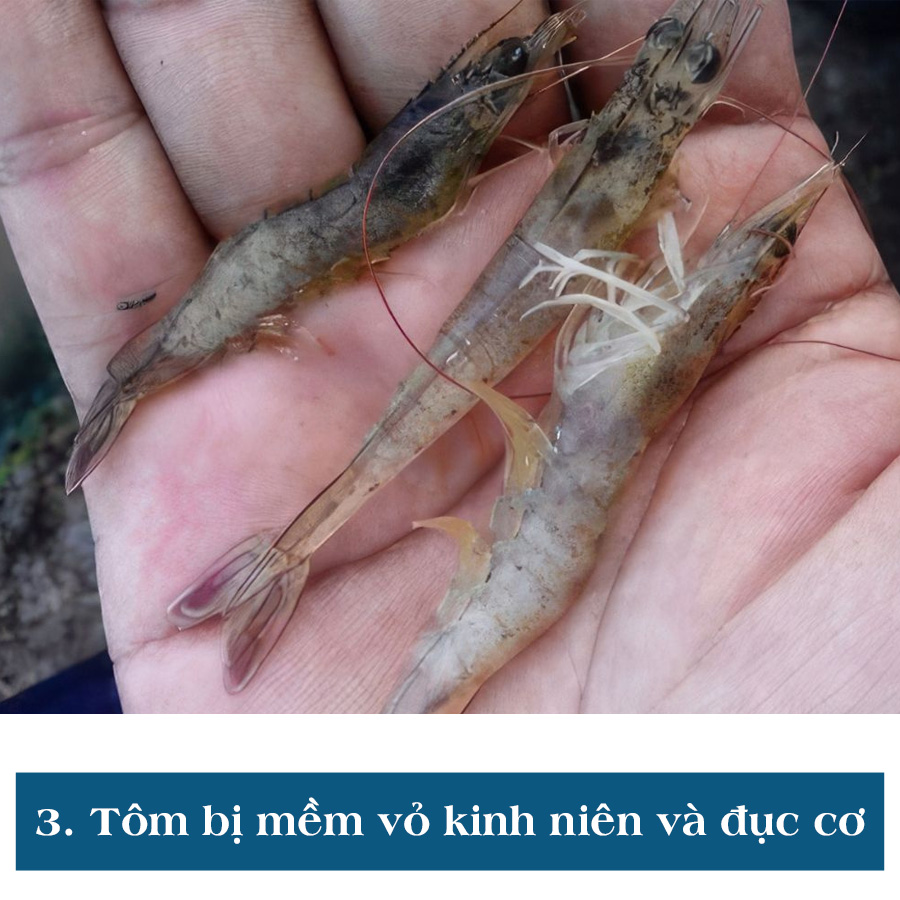
3. Chronic soft shell and mild muscle opacity in shrimp
Due to poor absorption of minerals and energy, the molting process of shrimp becomes disrupted.
Symptoms: The shell is thin and soft, feels rough to the touch, and takes a long time to harden after molting. Some shrimp show muscle opacity in the tail or along the dorsal line due to muscle tissue degeneration.
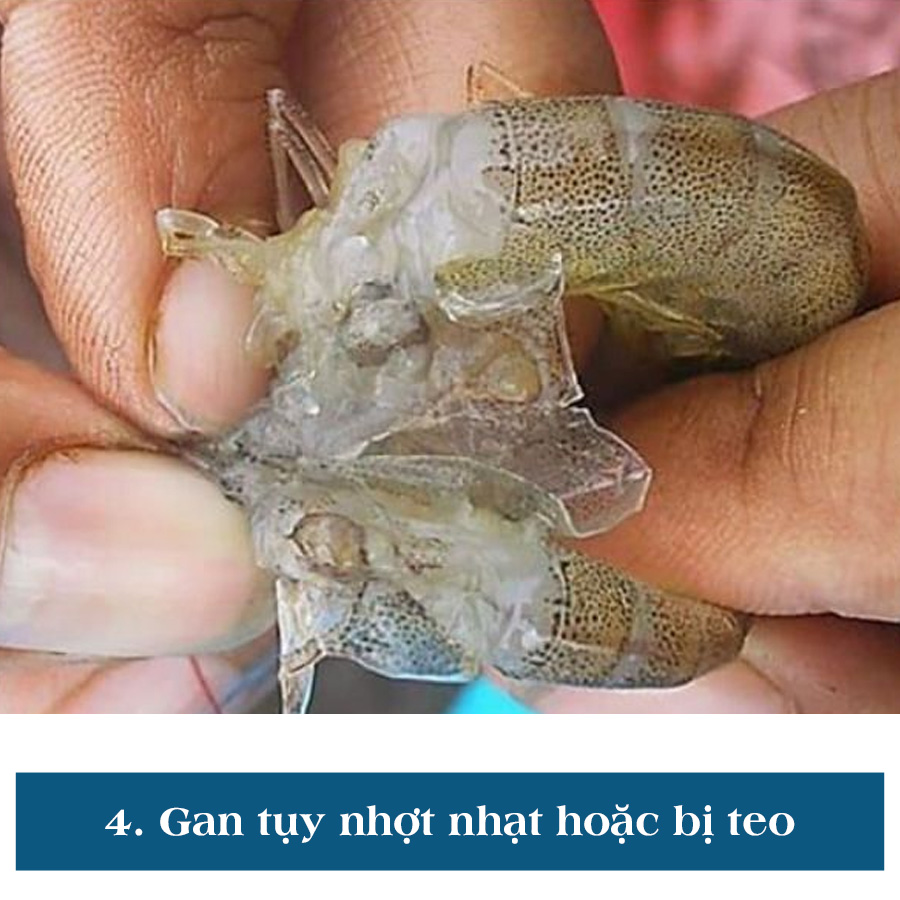
4. Pale or atrophied hepatopancreas
The hepatopancreas is the primary organ damaged by EHP. When observed carefully under natural light, farmers may notice:
Color: The hepatopancreas changes from dark brown to pale yellow, milky white, or slightly faded.
Size: The hepatopancreas becomes smaller and shows signs of atrophy, no longer plump as in healthy shrimp.
5. Abnormal shrimp intestine (broken, empty gut)
EHP damages the hepatopancreatic epithelial cells and directly affects the digestive system.
Signs: The shrimp intestine appears thin and faint, often broken or empty even though the shrimp are still feeding.
Note: Many farmers easily confuse this with White Feces Disease (WFD), but shrimp infected with EHP alone usually do not show large amounts of floating white feces on the water surface immediately.
6. EHP ROY – The solution to overcome EHP, keeping shrimp healthy and promoting fast growth.
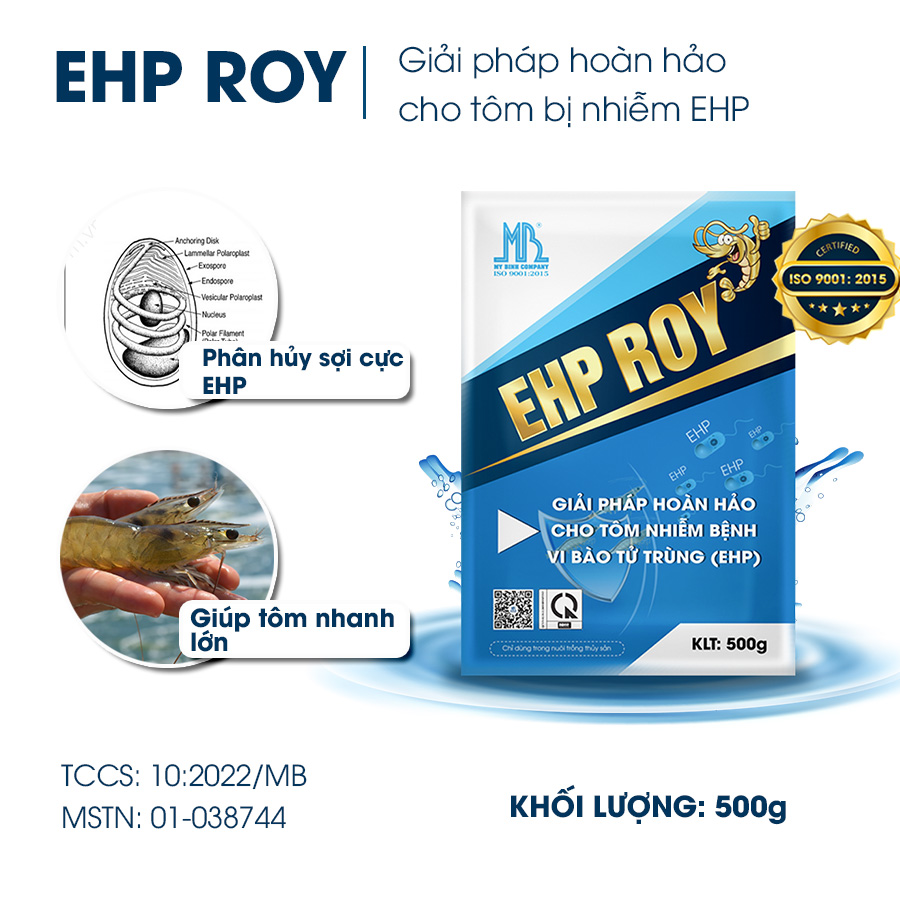
EHP ROY helps shrimp overcome EHP infection, stay healthy, and gain weight quickly.
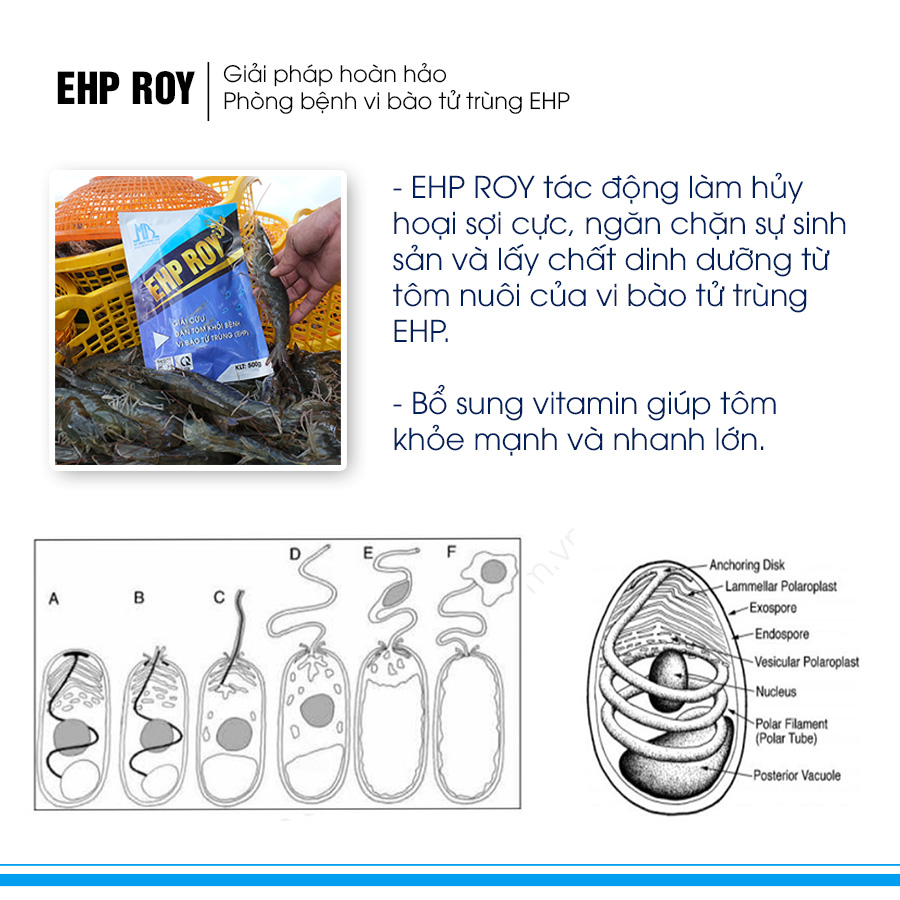
EHP ROY works by damaging the polar filament, thereby inhibiting the reproduction and nutrient absorption of the EHP microsporidian parasite in cultured shrimp.
It is also supplemented with vitamins to support shrimp health and enhance rapid growth.
Bringing successful farming seasons to our customers is the honor and pride of My Binh.
For product consultation and answers to any questions during your shrimp farming process, please call our Hotline at 0911 383 533 or 0983 173 322 to speak with our experts.
My Binh Company sincerely wishes all farmers a bumper harvest and good prices!
MY BINH TRADING IMPORT EXPORT COMPANY LIMITED
📲 HOTLINE: 0911 383 533 - 0983 17 33 22
🌐 Website: https://mybinh.com.vn
🏢 Head Office: 49/11B Tran Hoang Na, Tan An Ward, Can Tho City, Vietnam.
🏭 Manufacturing Plant: 28T Nguyen Van Quy, Hung Phu Ward, Can Tho City, Vietnam.
#ehp #ehpspores #ehproy