


EHP – The Silent Money Thief in Shrimp Farming: Signs and Solutions
Slow growth and size variation caused by EHP microsporidia are currently the biggest concerns for shrimp farmers. Learn more about the disease mechanism and the most effective solutions to overcome it.
What is EHP? Why is it called the “Silent Money Thief”?
In aquaculture, especially in whiteleg shrimp farming, the microsporidian parasite EHP (Enterocytozoon hepatopenaei) has become a serious nightmare. Unlike White Spot Syndrome Virus (WSSV) or Acute Hepatopancreatic Necrosis Disease (AHPND), which cause rapid and massive shrimp mortality, EHP attacks farmers’ profits in a far more subtle way.
Shrimp infected with EHP continue to eat and swim normally, but they fail to grow. When growth is suppressed, the feed conversion ratio (FCR) increases sharply. Farmers keep spending more money on feed, yet the shrimp remain “stunted,” ultimately leading to severe economic losses—even though the shrimp do not die.
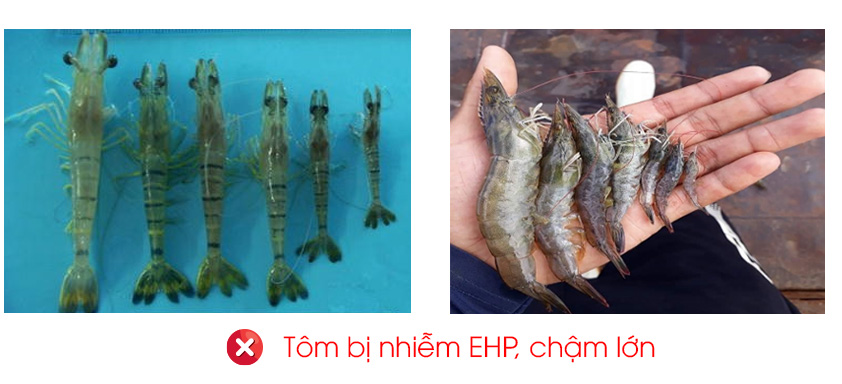
3 Signs to Identify Shrimp Infected with EHP (Microsporidian Infection)
Early detection of EHP is the key to minimizing losses. Pay close attention to the following signs:
1. Slow growth and severe size variation
After approximately 25–40 days of culture, if you observe a significant size disparity among shrimp in the pond (some much larger, others much smaller) despite adequate feeding, this is the first warning sign.
2. Abnormal hepatopancreas and digestive tract
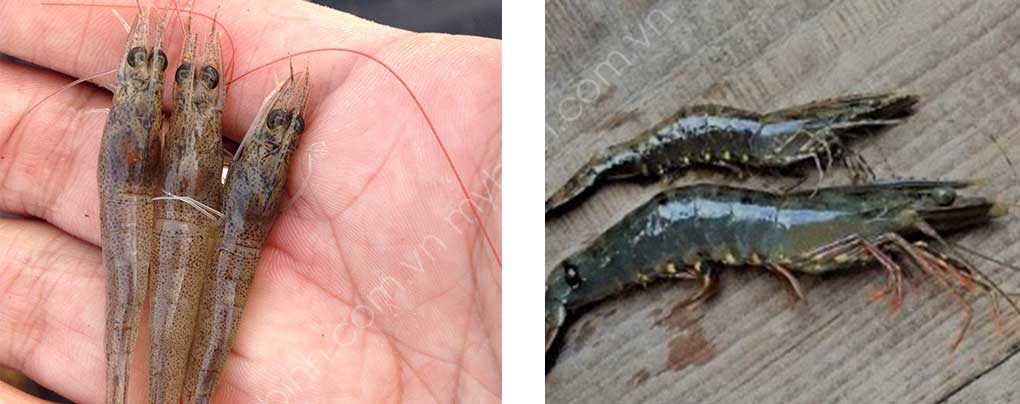
When examined under a microscope or closely observed, the hepatopancreas of EHP-infected shrimp often appears pale, shrunken, or shows faint white spots. The digestive tract may be broken, empty, or filled with watery fluid instead of feed.
3. Soft shell and muscle opacity
Due to poor nutrient absorption, shrimp commonly suffer from chronic soft-shell conditions, slightly opaque muscle, difficult molting, and low survival rates after molting.
Why is EHP so difficult to eradicate completely?
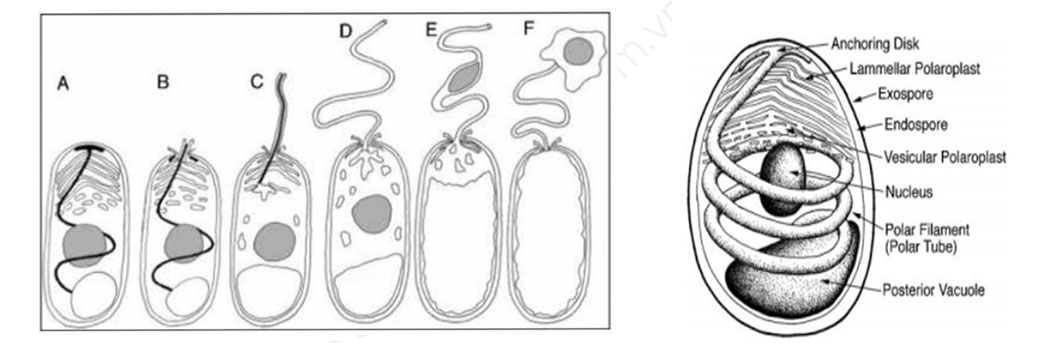
EHP spores have a very thick chitin wall, which allows them to survive extremely well in the pond environment, even after the use of common disinfectants such as low-dose chlorine.
The main sources of infection include:
- Shrimp seed: Vertical transmission from broodstock to post-larvae.
- Water source: Spores remain suspended in the water and enter the shrimp through the digestive tract.
- Pond bottom: Spores persist in pond sediment from previous crops that were not thoroughly treated.
An effective solution to control EHP for shrimp farmers
By understanding the mechanism of action and reproduction of EHP, EHP ROY inhibits Enterocytozoon hepatopenaei (EHP microsporidia) in shrimp by damaging the polar filament, thereby preventing reproduction and blocking nutrient absorption of EHP in farmed shrimp.
The product has been successfully tested in the company’s shrimp ponds and the results have been replicated and expanded to multiple customer ponds.
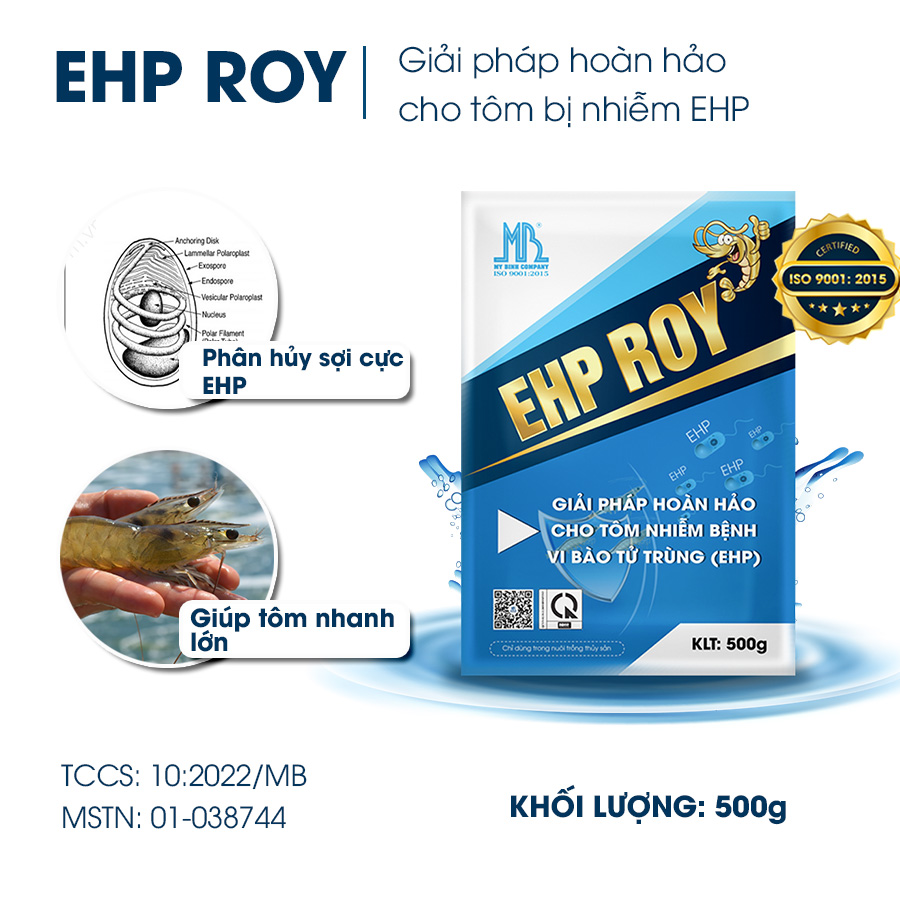
EHP in shrimp is not “incurable,” but it does require farmers to be persistent and follow a scientific treatment protocol. Don’t let EHP silently drain your profits! Prevention is always better than cure.
Contact My Binh Hotline now for detailed consultation on our products.
Hotline/Zalo: +84939881532 (WhatsApp, Line, Zalo, Messenger…)
Website: mybinh.com.vn
Wishing farmers success in environmental management and achieving large-size shrimp!